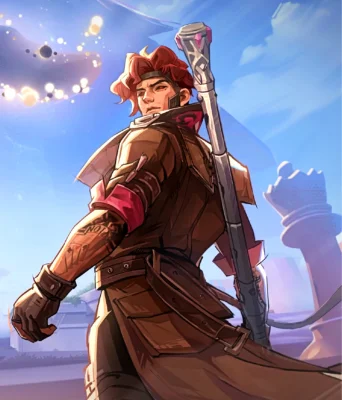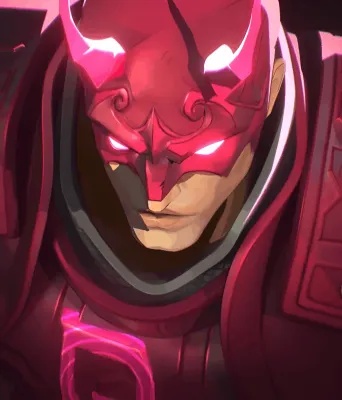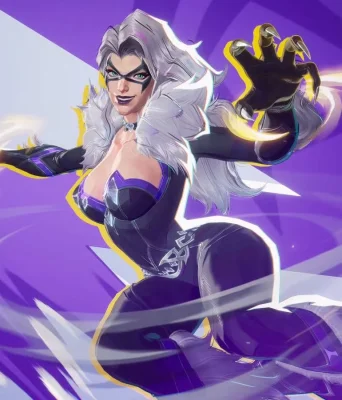
Picking the right tank in Marvel Rivals can be the difference between anchoring your team through a tough fight and spending the whole round watching your healers get hunted down. This guide covers every Vanguard hero in Season 7, ranked separately for competitive players (Diamond and above) and casual players (Bronze through Platinum), with full explanations for why each hero lands where they do.
This guide uses two separate tier lists, and that distinction matters more than most players realize. A hero like Hulk requires precise timing and mechanical knowledge to get full value from, so his ranking looks very different depending on the skill gap between you and your opponents. Reading the competitive list and applying it at Gold rank will steer you wrong. Read the section that matches your actual rank.
What Changed in Season 7.0
Season 7.0 brought balance adjustments across the entire roster, Team Up changes, and a new hero: White Fox. The changes with the biggest impact on the Vanguard class are:
Season 7.0 Vanguard Patch Highlights
7.0Two Lists, Two Metas
The competitive tier list covers Diamond rank and above, where players have solid matchup knowledge, coordinate Team Ups deliberately, and can consistently execute demanding kits. Bans are a real factor at this level, and players know how to play around setups like Peni Parker's mines or Groot's walls.
The casual list covers Bronze through Platinum, where teams are less coordinated, and some hero strengths are simply much harder to deal with. Aerial pressure from Angela, The Thing's sheer physical presence, and Deadpool's unpredictability all hit differently when opponents don't have the knowledge to counter them. Heroes with simple, independent kits punch well above their competitive placement in these lobbies.
A low rating in either list doesn't mean a hero is unplayable. These rankings reflect what tends to work best for players who haven't put extensive time into a specific character. Enough practice can make almost anything viable.
Vanguard Tier Rankings at a Glance
Diamond+ (Competitive) Rankings
| Tier | Heroes |
|---|---|
| S Tier | Hulk, Groot, Deadpool (Vanguard), Rogue |
| A Tier | Magneto, Thor, Doctor Strange, Venom |
| B Tier | Angela, Peni Parker, The Thing |
| C Tier | Emma Frost, Captain America |
Bronze to Platinum (Casual) Rankings
| Tier | Heroes |
|---|---|
| S Tier | Doctor Strange, Peni Parker, The Thing, Deadpool (Vanguard) |
| A Tier | Hulk, Angela |
| B Tier | Magneto, Groot, Thor, Venom |
| C Tier | Emma Frost, Captain America, Rogue |
Full Hero Breakdowns
Deadpool (Vanguard Role)
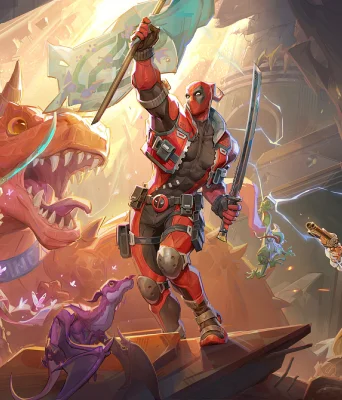
Deadpool is the only hero in the game who can play all three roles, and his Vanguard version sits at the top of both tier lists in Season 7.
His kit earns that spot because it's hard to read. He switches between close range sword fighting and ranged gunplay on the fly, making it difficult for opponents to commit to a specific counter. His deployable shield creates space or absorbs pressure depending on how you use it. The ability that really pushes him over is his rapid fire mode: the recharge is short, the fire rate is fast, and you can drop opponents with it much more quickly than most tanks can manage. His sword dash has eight charges on top of all that, giving him mobility few other tanks can match.
Don't dismiss his selfie ability just because it looks comedic. During it, Deadpool is completely invulnerable. Players already use it to survive ultimates and buy time for teammates to respond.
Deadpool has a high skill ceiling, so you'll get more out of him the more time you put in. His raw kit is strong enough that he's a top pick before you've fully mastered him, though. His ultimate deletes enemy backlines, his pistols shred tanks, and that combination is why he earns S Tier at every level of play.
His Team Up with Jeff the Land Shark (Strategist role) is still active this season.
Groot
At high ranks, Groot is one of the most impactful tanks in the game. Season 7 kept him there.
His strength comes from environmental control. Groot places walls anywhere on the map to cut off choke points, separate enemies from their healers, and reshape fights in ways no other tank can replicate. In the current triple healer meta, physically isolating a support from the group creates clean kill windows that wouldn't otherwise exist.
The Unstoppable status he gains near an Awakened Iron Wood Wall is what really separates him from the pack. Place the Iron Wood Wall somewhere enemies can't easily reach and destroy it, stay near it, and you become nearly impossible to move. His ultimate, Strangling Prison, sets up big combo potential alongside high damage ults like Namor's.
At casual ranks, Groot's walls create as many problems for his own team as they do for the enemy. Players who don't understand the kit will position poorly, accidentally shield near dead opponents, or simply ignore the utility entirely. There's real potential if you think through your placements, but B Tier reflects how often that potential goes unrealized in uncoordinated games.
Hulk (Bruce Banner)
Hulk is the biggest winner of the Season 7.0 patch. A second Gamma shield charge changed his entire gameplan.
With one shield, his dive and escape loop was workable but predictable. Two charges open up real decisions: use the first to close ground and absorb damage on the way in, keep the second for the retreat. Or use both offensively to push harder before backing off. Or save both defensively to protect yourself and nearby allies during a withdrawal. That extra resource makes him much harder to punish and gives him answers to situations where he used to just eat the damage.
Playing him well still requires solid ability timing and positional awareness. His health pool is massive, but so is his hitbox, so standing in the open and trading shots is how you become a free ult charge for the enemy. His Guard ultimate also generates faster now thanks to the extra Gamma Burst charge, so you'll have it up more consistently than before.
At casual ranks, Hulk drops to A Tier. He's reliable in close range brawls, and once you get the hang of the in and out rhythm, he's consistently effective. His limitation is zero ranged presence, so any opponent who recognizes the threat can just back up and poke him from a distance. He doesn't have any Team Ups worth banning around this season, which makes him a stable pick without that complication.
Rogue
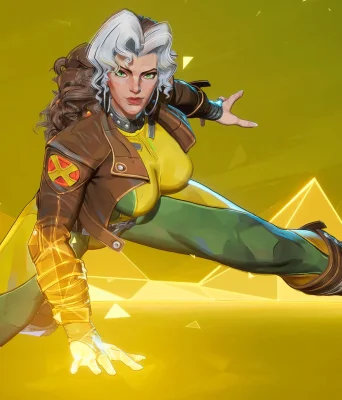
Rogue launched in Season 5.5 with a rough start. As players figured out her kit, she climbed steadily through the competitive rankings, and she now sits at S Tier for Diamond+ in Season 7.
Her kit is strong in skilled hands. She has real mobility for a Vanguard, burst damage from her combos, and the ability to drain enemy ult charge and steal their powers. Her block is empowered, her melee reach is deceptively long, and she functions as a flexible brawler who can disrupt backlines when played aggressively. Season 7 buffs pushed her further, and her Team Up with Gambit is one of the strongest pairings in the game.
Gambit's ban rate is the catch. He gets banned frequently in competitive play, which means Rogue's best version isn't always available. She's still a solid pick without him, just a step down from her full potential.
At casual ranks, she falls to C Tier for reasons that have nothing to do with her ceiling. She has a steep learning curve, she needs a reliable backline behind her, and her brawling playstyle only pays off when your team can back up the aggression she creates. That level of coordination doesn't exist consistently below Diamond. Players who fully commit to learning her can make it work, but she's not a hero you pick up and run with.
Magneto
Magneto is sliding from near S territory down to A Tier this season, and the Metal Bulwark cooldown increase is the main reason. Previously, his counter ult was reliably available when situations called for it. With the universal ult nerfs already reducing how often ults come online, and Bulwark now on a longer cooldown, that reliability just isn't there anymore.
His raw kit is still strong. The three hit combo that eliminates 250 HP heroes is one of the fastest burst windows any tank has. His ultimate got a projectile speed buff in Season 7, making it easier to confirm kills with and harder for opponents to react to. He also counters Emma Frost cleanly: his range wins the poke battle, his self bubble shuts down her grab and kick combo, and his shields neutralize her ultimate.
Dive making a comeback works against him too. His playstyle rewards a stable, anchored game, and the current meta is moving in the opposite direction.
At casual ranks, Magneto sits in B Tier. He's functional, but he's a harder version of what Doctor Strange does more simply. His ally bubble lasts only a few seconds, so your timing has to be deliberate to actually protect teammates. His ultimate is difficult to land correctly. With enough practice he can be a strong pick, but in lobbies where coordination is already thin, that investment has limited returns.
Thor
Thor has been buffed in almost every season since his rework, and Season 7 is where that investment shows. He's something of a sleeper pick: players who learn his specific rhythm will find him capable of serious brawling pressure that opponents struggle to deal with.
His kit runs on Thorforce, a resource displayed as hammer icons below your crosshair. His Awakened state is where most of his damage and mobility live, and the Season 5.5 buffs gave him enough movement in that state to chase down opponents who try to disengage. Those buffs are what put him at A Tier and kept him there.
His weaknesses are real, though. Thor is less durable than the top tanks, has no damage mitigation tools, and can't resist CC. All of that makes him dependent on consistent healer attention, which is exactly what casual lobbies struggle to provide. From Bronze through Platinum, where healer support is inconsistent, his performance suffers accordingly.
He's still a real threat to unprotected Strategists. His burst damage in Awakened state and his independently mobile playstyle mean that supports who are left alone become easy targets.
Doctor Strange
Strange's competitive and casual placements are about as far apart as any tank in the game, and the reason comes down almost entirely to accessibility.
He's the most approachable tank in the game. Shoot enemies, raise the shield to block incoming damage, repeat. His Shield of the Seraphim is the largest and strongest shield in the game and can absorb full enemy ults on reaction. His portal, Eye of Agamotto, lets him reposition himself and his entire team anywhere on the map, a playmaking tool that simply doesn't exist on any other hero. At casual ranks, that combination of ease and solid utility earns him S Tier. You don't need to study the kit deeply to get value from it.
In competitive play, it's a different picture. Seasons 5 through 7 have been rough for Strange. Other Vanguards got stronger, the meta shifted toward melee and mobile heroes, and dive coming back makes his kit harder to justify. The shield health nerf from 800 to 700 HP in Season 7 stings on top of all that. He's still a legitimate A Tier pick, but he's no longer the automatic first choice he used to be.
Venom
Venom's improvement in Season 7 ties directly to the return of dive. In previous seasons, healer ults cycled frequently enough to shut down backline dives before they paid off. With the universal ult nerfs cutting down how often those defensive tools come online, Venom now has actual windows to jump in and cause damage before the enemy can respond.
His mobility through Venom Swing and Frenzied Arrival is exceptional for a tank. He's also hard to kill when you play the engagement correctly, since his sustain and escape tools let him survive focused pressure long enough to disengage. Even when he doesn't secure kills directly, jumping the backline forces supports to react and burns their cooldowns, which creates space for teammates.
Gambit still checks him hard. The cleanse on Gambit's kit neutralizes Venom's ult status effect instantly, and Gambit gives enemy teams a clean escape from his pressure. That's still true in Season 7, just less punishing overall because conditions now favor Venom more broadly.
At casual ranks, Venom sits in B Tier. Without enough game knowledge and mechanical practice, his pressure often doesn't amount to much: he tickles opponents and charges their ults instead. He's disruptive enough against uncoordinated teams to stay out of C Tier, but his ceiling and floor are further apart than almost any other tank on the roster.
Angela
Angela is the only flying Vanguard in Marvel Rivals, and her aerial mobility is exactly why her tier placements diverge so sharply between rank brackets.
At casual ranks, players haven't developed the habits to deal with airborne threats effectively. Bronze through Platinum lobbies struggle to track flying heroes, rarely punish her cooldown windows, and tend to leave healers isolated or tanks overextended in ways she can exploit with Spear Impale. Her pattern of swooping in, applying pressure, and retreating back to her supports works extremely well against teams that can't coordinate a response.
At Diamond and above, opponents understand aerial characters and adjust. Season 7 gave her a mixed patch: bonus health and stronger spear throw damage on her ultimate are real improvements, but the Assassin's Charge nerf hits the core of her swoop in and out playstyle. On balance she's neither meaningfully stronger nor weaker than last season, landing in a high B Tier.
She plays best on maps with ledges for environmental kills. Maps that limit her displacement options give her a harder time.
Peni Parker
Peni's Season 7 story is mostly about one change: she lost her Team Up with Rocket Raccoon. That pairing had made her strong enough to draw serious consideration for priority bans. Without it, she's back to being a more independent pick.
In competitive play, Peni returns to her niche role. Her range is limited, and opponents with enough mobility can play around her mines without much difficulty. At Diamond+, players know how to path around traps, destroy her deployables, and manage her ult. She has unique utility that no other hero replicates, but it pays off consistently only in the right matchup or on maps where her kit thrives.
At casual ranks, she's a different animal entirely. Teams in Bronze through Platinum generally don't know how to spot her traps, avoid her Spider Nest, or path around her mines, and players run into them repeatedly because they haven't built those habits. Her Web Snare stun lasts three seconds and can cancel projectile based ults like Iron Man's Invincible Cannon, making it the most frequent and longest stun of any hero in the game. The health and speed buffs from recent patches make her harder to eliminate on top of all that. At these ranks, she earns S Tier comfortably.
The Thing
The Thing's tier standings are nearly inverted between competitive and casual play, making him one of the most rank dependent picks on the roster.
In competitive, he's moved up to B Tier because dive comps are coming back. He's a strong counter to mobile Duelists: any hero caught in his Slam's movement lockout becomes an easy target. He wins most Vanguard 1v1s when both sides have healers, and his Embattled Leap and Haymaker reworks from Season 3 gave him better tools for chasing opponents who try to create distance. Losing the Invisible Woman Team Up in Season 7 limits his comp flexibility, and he still struggles against teams that specifically play outside his range. In a dive meta, though, he has enough matchup value to justify B Tier.
At casual ranks, The Thing is a problem. Players at this level can't seem to take him down reliably, and he consistently finds his way to enemy healers without much resistance. Season 5.0 buffs made him harder to kill without organized focus, which casual teams rarely manage. The gameplan is simple: walk at the enemy team, find the supports, stay on them, and be difficult to remove. That works extremely well when opponents don't have the coordination to stop it.
Emma Frost
Emma Frost lands in C Tier on both lists, and Season 7 made things worse for her by adding nerfs on top of an already underperforming kit.
She switches between her normal form and Diamond Form. Normal form gives her solid mid range poke and a deployable barrier. Diamond Form turns her into a melee brawler with CC immunity and multiple CC abilities of her own, letting her dominate close range fights. Her Carbon Crush lunge reaches further than most players expect and catches people off guard. In Diamond Form she's also CC immune herself, which creates some dangerous close range scenarios.
The core problem is her complete lack of mobility. She can't chase retreating enemies, can't disengage when fights turn against her, and has no way to access high ground. In a Season 7 meta that rewards dive and mobility, those gaps get exposed more frequently than they used to.
At competitive levels, the nerfs pushed her to C Tier despite some relief from the Season 7 Diamond Form cooldown buff. She still struggles against hypermobile compositions. At casual ranks, she requires an investment that doesn't suit players still developing their fundamentals. Diamond Form timing, CC usage, and range management are all skill dependent in ways that take real time to develop.
She is a legitimate counter to Hulk (who sits at S Tier competitively), so if that's the specific problem you're trying to solve, she's a reasonable answer.
Captain America
Captain America took a major hit in Season 7 with the removal of his animation cancel technique. That tech was a meaningful part of his competitive kit, and losing it has made him arguably the weakest tank in the game at high ranks. The developers' reasoning behind the change hasn't been made entirely clear.
Steve Rogers' gameplay centers on using his dash, sprint, and slam to close ground and keep enemies in melee range. His shield blocks incoming damage and deflects projectiles, including some ults like Iron Man's Invincible Pulse Cannon. For pure objective stalling, he's still capable, and his rework and damage buffs have raised his baseline at lower ranks.
Stalling only pays off when your team can convert the distraction into kills, though, and Captain America relies heavily on teammates to make his pressure mean something. By himself, he struggles to eliminate opponents. At both rank tiers, that reliance is a hard ceiling. At casual ranks specifically, teammates can't consistently capitalize on what he creates.
Dive Comps in Season 7
Several tier shifts in Season 7 connect directly to dive returning as a viable strategy, and understanding what that means helps explain a lot of the ranking changes.
A dive composition uses high mobility heroes to jump the enemy backline quickly, targeting healers and isolated Duelists before the enemy team can react. In previous seasons, healer ults came online frequently enough to shut down dive attempts before they paid off. The universal ult nerfs in Season 7 reduced how often those defensive tools are available, which gives dive more room to succeed.
- Venom - Gains more reliable windows to pressure backlines
- The Thing - Strong counter to dive Duelists threatening your own backline
- Deadpool (Vanguard) - Mobile enough to operate within dive team frameworks
- Doctor Strange - Dive is harder to defend against with his kit
- Magneto - Loses some of the advantages his anchor playstyle relies on
Team Up Changes Affecting Vanguard Picks
Season 7 brought several Team Up changes worth factoring into your picks:
- Peni Parker was removed from Rocket Raccoon's Team Up, significantly reducing her competitive strength.
- The Thing lost his Team Up with Invisible Woman.
- Rogue's Team Up with Gambit remains extremely strong, but Gambit draws frequent bans.
- Groot's Team Up with Mantis is worth planning around: Groot generates ult charge from Mantis's healing, and that synergy compounds over the course of a match.
- Captain America has a Team Up with Winter Soldier that generates Bonus Health.
When building a composition around a specific tank, these pairings should influence which Strategists and Duelists you fill out the roster with.
Which Tank Should You Play?
Season 7 Vanguard Meta: The Short Version
Season 7 is a mobility and dive meta. Tanks that reward burst engagement, good positioning, and self sufficiency sit at the top: Hulk, Groot, Deadpool. Tanks built around stable, stationary play like Strange and Magneto are still solid, just a step down from where they were.
At casual ranks, the picture looks completely different. Ease of use, sustain, and raw physical presence drive the rankings more than synergy or meta knowledge. Doctor Strange, Peni Parker, and The Thing are your best options in those lobbies.