Activision has confirmed a major shift in Call of Duty's release strategy. No more consecutive Modern Warfare or Black Ops titles in back-to-back years.
Black Ops 7's poor reviews and disappointing sales forced the change. This marks one of the most significant policy shifts in the series' two-decade history.
Activision Addresses Player Concerns
An official blog post from "the Call of Duty team" and "Call of Duty Staff" delivered the news. That includes Treyarch, Sledgehammer, Infinity Ward, and Raven Software. The post directly acknowledged the franchise "has not met your expectations fully" for some players.
The change aims to deliver "an absolutely unique experience each and every year." The team committed to "drive innovation that is meaningful, not incremental." Specific plans remain under wraps for now, with details coming "when the time is right."
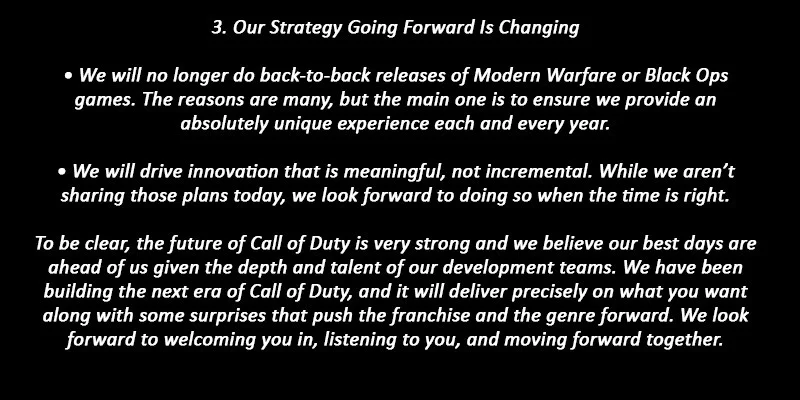
Developers framed this as building "the next era of Call of Duty." They promised to "deliver precisely on what you want along with some surprises that push the Franchise and the genre forward." Despite recent struggles, they're confident "the future of Call of Duty is very strong" and their "best days are ahead of us given the depth and talent of our development teams."
Black Ops 7's Rocky Reception
Black Ops 7 launched last month as a "spiritual successor to Black Ops 2." Studios poured their passion into what they considered a great game. Players and critics disagreed.
Campaign scored 6/10. Zombies mode also earned 6/10. Only multiplayer fared better with 8/10. These scores marked a sharp decline from the previous entry.
Players criticized story, multiplayer modes, and technical performance across the board.
Sales Performance
European sales data revealed troubling figures. Black Ops 7 dropped 63% compared to Battlefield 6 and declined more than 50% versus last year's Black Ops 6 during equivalent periods. The European launch has been characterized as "terrible."
Full sales visibility remains limited since Black Ops 7 launched day one on Game Pass. Many players likely accessed it through existing subscriptions rather than purchasing individual units, making the complete commercial picture difficult to assess.
Franchise Fatigue
Activision released Black Ops 7 in 2025, just one year after Black Ops 6's 2024 launch. Modern Warfare followed the same pattern with reboots in 2022 and 2023. This rapid-fire approach within the same subseries wore down the player base.
Both Black Ops 6 and Modern Warfare 2 (2022) received generally favorable reviews. Their immediate successors, Black Ops 7 and Modern Warfare 3, got hammered. Activision indirectly cited this fatigue as a factor in their decision.
A senior Treyarch developer acknowledged concerns before Black Ops 7 launched. Developers would be "dead lying" if they claimed not to worry about series fatigue from releasing two Black Ops games in consecutive years.
Activision's Recovery Plan
Changing future release schedules is only part of the solution. Activision outlined additional steps to address Black Ops 7's current problems and restore player confidence.
Starting next week, multiplayer zombies mode goes free. The trial coincides with a Double XP weekend, designed to get hesitant players to "experience the game firsthand and decide for yourselves." Activision wants players forming their own opinions rather than relying solely on reviews and community sentiment.
Activision described their plans as "unprecedented seasonal support" for Black Ops 7. Season 01 is "the largest live season ever" and they're "just getting started." The team declared "we won't rest until Black Ops 7 earns its place as one of the best Black Ops games we've ever made." This suggests significant resources will go toward improving the game post-launch rather than quickly shifting focus to the next annual release.
Ending back-to-back subseries entries directly tackles the root cause of fatigue identified by developers and players alike. This policy shift represents the most concrete long-term adjustment.
Pre-Launch Corrections
Black Ops 7's development team tried addressing concerns before launch based on beta feedback. They loosened skill-based matchmaking (SBMM) for the first time in franchise history. They also cancelled planned crossover cosmetics to address Call of Duty's "ugliness epidemic," the proliferation of garish or thematically inappropriate cosmetic content.
These pre-launch changes show the team recognized potential issues and attempted fixes. The adjustments ultimately proved insufficient to prevent negative reception after release.
Competitive Pressure Mounts
The franchise has maintained annual releases for over two decades. Recent years brought increasing scrutiny about this pace and whether it allows sufficient innovation and polish.
Battlefield 6's strong European performance relative to Black Ops 7 suggests players will gravitate toward alternative military shooters when Call of Duty entries fail to deliver. This competitive pressure likely pushed Activision toward substantial strategic changes.
Activision's commitment to "unique" experiences each year is a positive step toward variety. But the announcement stops short of addressing whether annual releases themselves contribute to franchise fatigue.
Unanswered Questions Remain
Specific plans for future Call of Duty releases beyond avoiding back-to-back subseries entries haven't been revealed. The development team promises meaningful innovation but hasn't detailed what forms that innovation will take or how it'll differentiate future entries from recent releases.
The commitment to unique experiences "each and every year" suggests annual releases will continue. Current assumptions point toward Call of Duty 23 arriving in 2026.
Alternating between Modern Warfare, Black Ops, and potentially other subseries (or entirely new approaches) might not be sufficient to address fatigue. The true test of these changes will take several years to fully understand.
What Comes Next
The announcement is a rare public acknowledgment from Activision that their strategy required adjustment. Poor reviews, declining sales, and negative player sentiment created circumstances where maintaining the status quo risked further eroding the franchise's position.
By committing to end back-to-back subseries releases and promising meaningful rather than incremental innovation, Activision signals they understand the problem even if the full solution remains undefined.
For players, the immediate focus centers on whether promised seasonal support will improve Black Ops 7's current state. The upcoming free trial could change perceptions or confirm them.
Long term, success depends on whether alternating subseries entries allows sufficient development time and creative space to deliver the "absolutely unique experiences" Activision promised. Balancing the traditional annual release schedule with genuine innovation is the central challenge facing Call of Duty as it enters what developers describe as its "next era."