Diablo 4's Tower and leaderboard system has been live for nearly two weeks, and the problems are piling up. Exploits, bugs, and questionable design choices threaten to undermine the competitive integrity of what Blizzard has labeled a beta feature.
The issues run deep. Players have discovered ways to manipulate timers, duplicate item affixes, and abuse pre-run mechanics for unfair advantages. Beyond the exploits, the Tower's core design suffers from punishing HP scaling, useless pylons, and a complete lack of variety between leaderboard resets.
This breakdown comes from testing across multiple classes, including rank one clears on the Sorcerer and Spiritborn leaderboards and a rank three Hardcore Paladin finish. Both solo and group play were tested, including support Barbarian party pushing on Softcore.
Blizzard has committed to developing the Tower over multiple seasons with community feedback. Given how barebones the system feels right now, major changes seem inevitable over the coming year.
Exploits Warping the Leaderboards
Infinite Boss Timer Manipulation
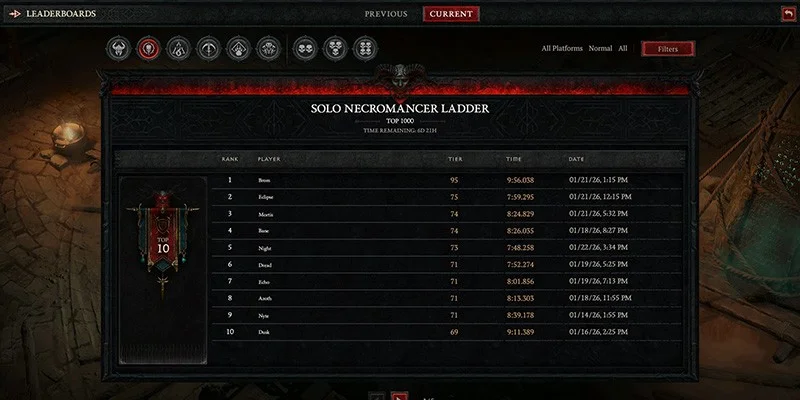
The Softcore Paladin leaderboard shows clear evidence of timer manipulation. Clears exceeding 17 minutes have appeared despite the system kicking players out at 10 minutes. The exact method remains undisclosed to prevent further abuse.
A separate bug complicates matters further. The game randomly adds one minute to completion times after runs finish. A legitimate 9:03 clear might display as 10:03, making it hard to tell exploited runs from bugged legitimate ones.
Grace Period Abuse
The Tower's grace period before runs start has a major oversight. Players can stand in the starting circle, pull the first monster pack including elites, and whittle enemy health down to 1% before the timer starts. Stepping out of the circle lets them instantly kill the elite, collect progress globes, and gain roughly 5% progression before the run truly begins.
Certain builds exploit this even harder. Judgement Paladin can stack Aspect of Ascension and Aspect of Celestial Strife buffs while sitting in the circle for about three minutes before attempting the run. Paladin dominance on the leaderboards suddenly makes more sense.
Double Tempering Exploit
A spreading exploit lets players apply duplicate greater affixes through the Tempering system. Screenshots show items with impossible rolls like double En Garde tempers. The exact method hasn't been disclosed, but every legendary can potentially receive extra tempers, squeezing out an additional tier or more on top level clears.
Buff Snapshot Problems
Multiple classes deal with buffs that don't recalculate properly when conditions change. Paladins have it worst with the Castle Paragon legendary node. Temporary armor buffs aren't factored into damage calculations correctly, meaning some builds actually deal less damage than they should.
Bugged Enemy Projectiles
Certain elite affixes malfunction and spawn around 100 projectiles instead of a handful. Both saw blade enemies and mortar affixes can do this. Without an extremely tanky build, these bugged encounters mean instant death.
The Blood Below boss has a similar problem. It can spawn roughly 10 void zones stacked on top of each other, instantly killing anyone caught in them. Hardcore players face particular danger from these bugs.
Macro Advantages
The current meta rewards constant button spam, and Judgement Paladin is the worst offender. Playing manually puts players at a clear disadvantage against anyone using macros to spam their entire skill bar, including potions, five or more times per second.
This isn't new. Videos submitted for the Helltide Pit leaderboards frequently showed macro usage. Blizzard has largely ignored the issue, but official leaderboards demand some kind of stance.
Core Design Problems
Nothing Changes Between Resets
The biggest design flaw is simple: nothing changes when leaderboards reset. Random maps and random monsters add some variety within runs, but every two week period sees the same builds, same tiers, and same strategies.
After the first two weeks of a season, serious pushers have perfect gear. They have no reason to come back for the next leaderboard because everything plays exactly the same.
The old Gauntlet system was unpopular, but it had one thing going for it. The map changed every rotation, forcing new strategies and route optimization. The Tower needs something similar to keep players coming back.
Brutal HP Scaling
After Pit 100 and Tower 100, each tier adds a 32% multiplicative HP increase to monsters. Damage barely scales at all. The difficulty curve becomes absurd.
A player clearing tier 120 in 5 minutes might feel confident about tier 125. They'll fail miserably. The math is brutal:
- Two tiers higher = 74% more HP
- Three tiers higher = 230% more HP
- Four tiers higher = 300% more HP
Sanctifying gear with both The Grandfather and Ring of Starless Skies, the two most popular sanctifications, only adds about four tiers worth of damage. A perfectly rolled amulet with three great affixes might make a character 0.2 tiers stronger.
Diablo 3's Greater Rifts used 17% scaling per tier, nearly half of what Diablo 4 uses. D3 also had Area Damage and Bane of the Stricken to boost player damage as content got harder. Diablo 4 has no equivalent mechanics. Players face exponentially tankier enemies with no corresponding damage increases. This leaves a tiny band of viable push tiers, maybe two or three tiers of variance compared to D3's five to fifteen tier range.
The 10 Minute Timer Creates Problems
The slower push gameplay offers something different from Diablo 4's usual fast pace. But the 10 minute timer causes issues.
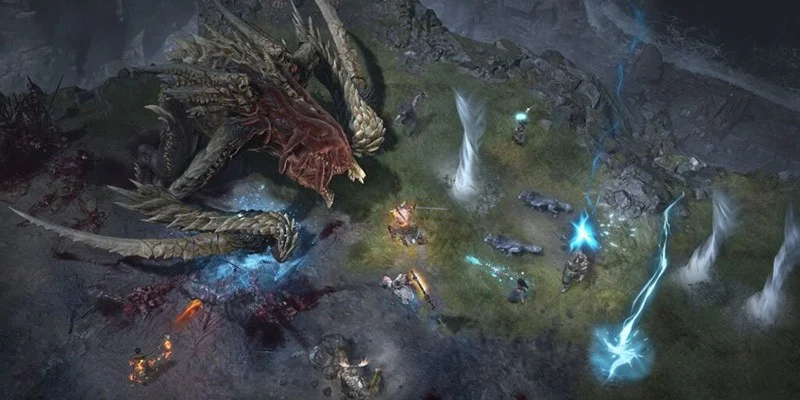
Diablo 4's engine struggles during extended group pushing. Pulling enemies together creates serious lag without even trying hard. Without mechanics like Bane of the Stricken, builds fishing for good runs at high tiers face extremely long boss fights. Past examples showed 10 minute boss fights alone.
Build balance varies wildly. A Sorcerer spawning a boss with 45 seconds left basically wins. A Paladin might need six minutes or more for the boss alone.
Dropping the timer to 8 minutes or even 6 minutes would force players into lower, more manageable tiers. Less time spent on spongy elites and bosses. Movement speed and quick decisions would matter more. It would match Diablo 4's naturally fast combat better.
The game feels best during the middle of progression when running quick Pit clears for glyph leveling. That's Diablo 4's combat at its peak.
Globe and Pylon Systems
Globe Collection Works Fine
Many players complain about collecting progress globes, but the system has merit. The Tower isn't something players grind constantly like D3's Greater Rifts. Globe collection adds minor decisions about timing and encourages movement skills in builds.
The visual feedback needs work though. D3 showed exactly how much each globe added to the progression bar with satisfying effects. Diablo 4 should copy this.
Pylons Are Nearly Useless
The pylon system requires damaging pylons before clicking them. An interesting concept ruined by poor execution.
Pylons are too tanky. Players skip them on higher tiers because unlocking them takes too long. HP scaling affects pylons too, so the relative benefit of unlocking one actually decreases as players push higher. Same benefit, more time spent.
Only the Power pylon matters. Speed, Channeling/Cooldown, and Resource pylons add nothing to completed builds. A character ready to push already has everything sorted. Only the quadruple damage boost from Power pylons is worth the effort, and even that often gets skipped unless it's positioned well for a boss fight.
Timing is awkward too. By the time players clear enemies around a pylon and unlock it, nothing remains to benefit from the power boost. Then it's a sprint to the next pack hoping something survives the 10 second duration.
Leaderboard Interface Failures
No Real Snapshots
Current leaderboards don't show what players actually used for their clears. The displayed information just reflects the character's current gear, which can change after the run. Players switching to evasion gear appear on the leaderboard with builds they never pushed with.
Players can also hide their profiles entirely. No legitimate reason exists for this option in competitive leaderboards. Hidden profiles block learning from top players, prevent verification of legitimate clears, and make it impossible to understand the actual meta.
Terrible UI Performance
The leaderboard UI performs poorly. Navigating to later pages in the top 1,000 gets progressively slower and eventually freezes around page 60. No scroll bar exists to jump directly to specific rankings.
Group leaderboards don't even show which classes players used. A basic oversight for competitive content.
No Hardcore Death Tracking
Hardcore leaderboards don't indicate whether a character died after making their clear. Adding a grayed out name with a skull icon for deceased characters would add context and entertainment value.
No Replay System
The old Helltide Pit leaderboards required video submission for ranking. This provided transparency but created barriers. The current system removes that barrier but offers zero visibility into how clears happened.
An automatic replay system should save at least the top 10 runs each time rankings update. Let players click a replay button to watch the run. Save replays until the next leaderboard period. This would verify legitimate clears, surface innovative strategies, and help identify exploits.
Build Specific Problems
The Potion Spam Meta
Every class except Rogue has access to the Imbiber glyph, which provides 5% extra damage per missing health potion. Combined with pants rolls for extra potion capacity and Dark Citadel incense granting +3 potions, some builds run with around 10 potions.
Players must constantly spam potions to maintain zero count for maximum damage. Manual play becomes nearly impossible to execute well. Macro users gain real advantages. The gameplay feels awful.
A defensive stat roll providing offensive benefits makes no sense. This glyph should be removed from every class. It adds nothing positive while encouraging macro abuse.
Map and Monster Imbalance
Major disparities exist between map layouts and monster types. Maps generally matter more than monsters, though this varies by build.
Different builds interact with layouts differently. Sorcerers primarily hunt rare elites regardless of map. Paladins need large open layouts like temples and struggle badly in narrow corridors where grouping enemies becomes difficult.
The current state encourages excessive fishing. Players load in, see an unfavorable map, and teleport out immediately. Some fishing is inevitable in random systems, but players should have reasons to attempt runs rather than instantly abandoning them.
There's also no reliable way to leave runs. Small enemies constantly interrupt portal casting. Unlike D3's Homing Pads that provided protected teleportation, Diablo 4 offers no solution. Hardcore players can't even choose to die since that ends their character.
Unthreatening Bosses
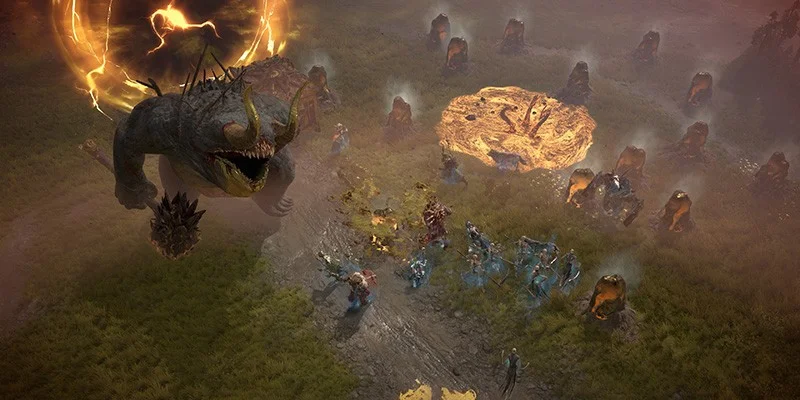
The Tower's unique bosses with distinct movesets are a positive addition. But they pose virtually no threat to characters capable of reaching them. All boss abilities deal minimal damage. Even Spiritborn can tank major slams without worry.
Current boss design features massive health pools with minimal damage output. Rebalancing toward less health and more threatening abilities would create better encounters.
Broken Monster AI
Pulling packs together is a core pushing strategy, but inconsistent monster AI constantly undermines it. Blue elite packs suffer most from this. Three monsters might follow while two others stand idle in a corner.
Group aggro mechanics would help. Engaging part of a pack should trigger the whole pack to follow, potentially with falloff based on distance. Players could then execute strategies consistently instead of fighting broken AI.
Leaderboard Filters Needed
The single leaderboard per class creates problems for build diversity and community health.
D3's solution gave each set its own leaderboard plus a category for players not using any set. Each class had six different leaderboards. Diablo 4's itemization doesn't support this exact approach, but alternatives exist.
The push meta build often differs from the best overall build. Judgement Paladin tops the leaderboard despite being far less enjoyable than the Auradin build. Without filters, players see the top build and assume it's the best choice for everything. Many end up playing builds they won't enjoy.
Filters should populate automatically based on actual clear data. The system would need to identify builds by primary damage sources, key items, temper choices, and specific proc effects.
This would let players see how their preferred playstyle ranks without forcing everyone into a single meta build. It would also give content creators better data for recommendations.
What Comes Next
The Tower has potential but exists in a state that's too bare, too exploitable, and too flawed in its core design. Blizzard says they'll iterate based on community feedback, which at least suggests they know the work isn't done.
PTR information should arrive in two to three weeks. Major updates may come in the next Tower iteration. The second expansion will likely bring another round of changes.
Priorities should include fixing current exploits and bugs, adding dynamic rotating elements, rebalancing HP scaling, redesigning the pylon system, implementing proper leaderboard snapshots and better UI, and introducing build filters.
Until these changes arrive, the leaderboard experience remains compromised. Exploits inflate certain clears. Design choices limit replayability. Scaling issues make character progression feel unrewarding.
A solid competitive system could emerge from this foundation, but only if Blizzard treats the beta label seriously and commits to real iteration.