

The War Within is behind us. Midnight is coming, and with it, the entire PvP landscape is getting reshuffled. Talent reworks, hero talent changes, ability pruning, and the gear reset that comes with every new expansion all play a role in deciding which specs rise and which ones fall. This tier list covers every DPS and healer spec for Threes Arena and Solo Shuffle, the two formats that matter most heading into Midnight. Threes has the best rewards, Solo Shuffle is the most popular bracket, so those are our focus.
Before we get into individual specs, a few big-picture themes come up again and again throughout this list:
Secondary Stat Scaling. Every new expansion drops players back to low secondary stats. Less Haste, less Mastery, less Versatility, less Crit. Specs that need those stats to function (casters who need Haste to get casts off, specs whose damage engines scale off Mastery) tend to struggle early on. Melee specs dealing instant damage with no cast times don't have that problem, and they naturally perform better at low stat levels. You'll see this referenced a lot.
Pruning. Midnight brings heavy ability pruning across many specs. Some lost key utility, CC, or defensives. How much a spec lost, and whether what's left is still enough, plays a big role in where it lands.
Melee with Ranged Damage. A clear pattern shows up: melee specs that can deal meaningful damage at range jump ahead of the pack. They avoid the kiting problem that plagues pure melee while still benefiting from instant-cast damage that doesn't need secondary stats.
Tuning Can Change Everything. Numbers are never final. One hotfix bumping a core ability's damage by 10-15% can move a spec up or down an entire tier. This list reflects what's been observed during beta testing, but launch tuning will shift things around.
How to Read This Tier List
Specs are ranked within each tier from left to right, with the leftmost being strongest within that tier.
S Tier: The strongest specs in the game. These carry games, have complete toolkits, and reliably find win conditions. Playing one of these gives you a real advantage.
A Tier: Strong, viable specs that absolutely compete. You can climb and succeed with these, but they have a weakness or two keeping them from the top.
B Tier: Functional but flawed. These can work in skilled hands, but you'll feel noticeable disadvantages compared to higher-tier picks. Some just need number buffs; others have deeper structural issues.
C Tier: Struggling specs facing significant obstacles. You can still win, but it's considerably harder, and the gap between you and the competition will be obvious.
S Tier

Survival Hunter
Survival sits at the very top of this list, and it earns that spot convincingly. It's the perfect example of the "melee with ranged damage" archetype that dominates season-one environments. Everything in its toolkit feeds into everything else, creating a damage engine that just keeps rolling.
You get two charges of an AoE explosive fire grenade that leaves a burning patch on the ground, dealing a big chunk of elemental damage. Mixed damage types (fire, arcane, nature, physical) are a huge deal in arena because opponents can't just stack armor or one type of mitigation to shut you down. On top of the grenades, you have two charges of Wildfire Bomb, and these can reset the cooldown of Boomstick, an AoE shotgun channel that pumps out massive upfront damage in rapid hits.
All of these abilities funnel into each other. Kill Command still has multiple charges feeding the engine. The result is a constant stream of AoE damage, targeted AoE, single-target pressure, and bombs, all without needing a single cast time.
Beyond raw damage, Survival keeps all the CC that Beast Mastery has: stun, Freezing Trap, and solid kill-window setups. You've got a Mortal Strike effect for healing reduction. You can chase targets easily and finish runners with ranged abilities. That combination of melee pressure and ranged finishing is exactly why it dominates when other melee gets kited and casters struggle with low stats.
Subtlety Rogue
Sub Rogue makes S Tier on the back of pure single-target kill threat that stays dangerous across the entire expansion.
The design philosophy is blunt: with infinite Cheap Shot spam gone (now capped at two charges) and Rupture removed from the kit, Sub lost its old multi-target control toolkit. In exchange, Eviscerate hits absurdly hard. Sub's entire identity now revolves around threatening a 100-to-zero kill on one target inside its stun windows. Goremaw's Bite adds to the burst, lashing out for Shadow damage while making your next three finishing moves cost no Energy and awarding combo points.
That makes the spec somewhat one-dimensional compared to what it used to be, especially after heavy pruning. But that one dimension happens to be the most important one in arena: killing people. Sub keeps the core Rogue toolkit (two Cheap Shots plus Kidney Shot, Blind, Sap out of Blind when you force combat drops), and it does this better than other Rogue specs since it has both Vanish and Shadow Dance to re-enter stealth. No other Rogue spec touches its single-target burst.
One thing to watch: as health pools scale up toward the end of the expansion, Sub's one-shot threat might not keep pace. That could leave it feeling hollow since so much old utility and CC was pruned. But in a season-one environment with lower health pools, this spec is terrifying.
Demonology Warlock
Among casters, Demo stands apart because it mostly bypasses the secondary stat problem that drags other casting specs down in season one.
The talent restructuring is nasty. Vile Fiend is now baked into instant-cast Dreadstalkers, saving you a global cooldown and a cast time while instantly deploying pressure. Demo's burst cooldowns feel like they've been condensed into fewer button presses with more output, carrying a distinctly Legion-era pet army flavor.
Demo benefits from the same dynamic that pushes Beast Mastery and Unholy to the top: pet-based damage is brutal to deal with in Solo Shuffle. You can't just peel the damage off. The pets are always there, the pressure is constant, and Demo backs it up with Axe Toss (pet stun) and spammable Fear for CC. That gives it more crowd control options than most DPS specs in the game.
On defense, Demo has strong survivability through Demonic Pact, Unending Resolve, Demonic Gateway, and the full Warlock defensive package. Fel Lord still provides a valuable AoE stun to knock melee off you.
The main risk is a super melee-heavy meta. If Beast Mastery and Survival Hunters are training you every game, Demo could slip. But right now, the toolkit is complete and the damage works without needing high stats to function.
Beast Mastery Hunter
BM isn't winning any complexity awards. It runs on about four core abilities. But every box that matters in Solo Shuffle and arena? BM checks it.
You've got a stun, Freezing Trap, relentless single-target damage, a powerful cooldown amplifying all that single-target output, and a Mortal Strike effect. Nearly every damage effect is passive or instant, so there's almost nothing for opponents to interrupt or outplay mechanically. Bleed damage is nearly impossible to shake because it reapplies so easily. Pet-based damage follows targets regardless of distance, making you hard to kite, and the swarm of pets during burst windows makes the pressure feel suffocating.
BM paired well with Death Knights throughout The War Within, and nothing about that formula has fundamentally changed. It provides Mortal Strike, excellent CC, relentless pressure, and damage that simply cannot be removed.
The obvious downside is that BM can feel boring. But that simplicity cuts both ways. With so few buttons to press, players execute it effectively almost by default, which means the performance floor is extremely high.
Unholy Death Knight
Even after heavy nerfs (20-30% reductions to almost every ability from pre-patch), Unholy keeps enough tools to hold an S Tier spot, though it sits at the lower end.
The stackable Mortal Strike effect is huge. The more stacks you apply, the harder it becomes for the enemy healer to keep up. Sustain damage through DoTs, pets, Magus of the Dead, and Raise Abomination is largely unpeelable. You can't just run away from Unholy's damage because so much of it follows you passively.
Putrefy is the big addition, giving Unholy spike damage it historically never had. You now get the on-demand burst pressure of Frost while keeping the full Unholy sustain toolkit. The Soul Reaper window combined with triple Putrefy creates a kill threat that's scary even post-nerf.
For context: pre-patch Unholy was doing next-expansion levels of damage and would have been the undisputed best spec in the game. The across-the-board nerfs were completely justified. But "brought in line" for a spec with this complete a toolkit still means S Tier.
Mistweaver Monk
Mistweaver looks like the top healer heading into Midnight, with throughput, self-sustain, and cooldowns that feel a step above the rest.
A key new talent makes Renewing Mist heal for 500% more on the lowest-health ally. This creates a smart-healing safety net: every time a teammate drops low, this massively buffed HoT kicks in and pulls them back up. The pacing it creates is excellent. Teammates get low, they bounce back up, get low again, bounce back. Then Mistweaver has Life Cocoon and Revival as major cooldowns to push through dedicated burst windows.
You've got answers for both sustained damage (the 500% Renewing Mist) and burst (Cocoon, Revival with its immunity). Good mobility, strong self-sustain including port to dodge swaps, solid crowd control through Paralysis and Song of Chi-Ji. The whole package is extremely complete.
The risk is tuning. If Mistweaver's numbers get hit hard, it might not have quite the toolkit depth of Restoration Druid to fall back on. But at current tuning, the throughput and cooldown effectiveness are outstanding.
Holy Paladin
Holy Paladin enters Midnight with a toolkit that feels built for Solo Shuffle success, especially when secondary stats are low.
Double Infusion of Light is the cornerstone. Without much Haste in season one, hard-casting is rough for every healer. Holy Paladin sidesteps this with instant-cast Flash of Light through Infusion of Light, which generates Holy Power for instant-cast Word of Glory. The double Infusion opens up flexible healing chains: Infusion into Word of Glory into Infusion into Word of Glory, or double Infusion then spend. Lots of ways to pump out instant-cast throughput without standing still.
Beyond throughput, Holy Paladin has always had great cooldowns to cycle: Blessing of Sacrifice, Blessing of Protection, Blessing of Spellwarding, plus hero talents enabling a more defensive style if needed. Losing Rebuke (kick) actually hurts Holy Paladin less than other healers, since Paladins sometimes didn't want to be mid-map for one kick only to get swapped on and deleted.
A notable new mechanic converts 15% of overhealing from Holy Light or Flash of Light into an absorb shield. Overhealing happens constantly in PvP, so your heals are never truly wasted. Excess healing becomes a shield preventing future damage, which keeps health bars fuller. In Solo Shuffle especially, where there's no voice comms, teammates who feel healthy play more aggressively and try harder to win. That's your best path to victory.
Windwalker Monk
Windwalker earns S Tier through one critical mechanical change that fixes its biggest historical weakness in Solo Shuffle and Threes.
Storm, Earth, and Fire is replaced by Zenith, and that changes everything. The old SEF created clones that were extremely vulnerable to AoE CC: roots, disorients, anything that hit the clones would gut your burst damage. You could actually hurt yourself by pressing your offensive cooldown, which is terrible design for competitive play. Zenith replaces this with a flat damage modifier plus Chi cost reduction, letting you get your burst off faster without any clone vulnerability.
Everything else that makes Windwalker scary stays: Mortal Strike effect, excellent mobility, spike damage, and the ability to 100-to-zero targets in stuns. Now you can do all of that in a way that's much harder to peel, built for the chaotic Solo Shuffle and Threes environments where opponents are constantly trying to disrupt your damage.
Windwalker can still get kited in some matchups, which is why you could argue for high A Tier instead. But the Zenith change is significant enough to push it over the line.
A Tier

Frost Mage
Frost Mage benefits from a reworked Shatter mechanic that makes it much less dependent on CC for its damage.
The new Shatter applies a stacking debuff (up to 20 stacks) that you spend with Ice Lance and Glacial Spike for big damage. You generate stacks through your normal rotation and cash them in for burst. This is a major improvement because historically, Frost needed targets frozen or rooted to get Shatter damage. CC-immune targets or enemies with root breaks could shut you down completely. Now you still get those Shatter combos off regardless of CC diminishing returns or immunity effects.
The rotation supports a fluid instant-cast pattern: Flurry into Ice Lance into Flurry into Ice Lance, combined with Frozen Orb for on-demand pressure. Frost also has multiple schools for CC and damage, so one interrupt doesn't lock you out of everything. If you bait kicks or land a Precognition proc, you can follow up with Glacial Spike for devastating finishing power.
Like all casters, Frost could suffer from low stat scaling early in the expansion. But its instant-cast-heavy rotation handles this better than most caster specs.
Fury Warrior
Fury's placement comes down almost entirely to one talent that creates unique, potentially game-breaking win conditions in Solo Shuffle.
Kill or Be Killed is the centerpiece. When you take fatal damage, you instead become unkillable and immune to movement-impairing effects for 8 seconds. If you kill the enemy who downed you in that window, you come back with at least 20% health. If you don't get the kill, you die for real. It has a 5-minute cooldown.
This creates several dangerous scenarios in Solo Shuffle:
Late Dampening Chaos. Most rounds that go deep end with one player barely dying while the enemy team's target is sitting at 20-30% with no defensives left. Normally the first kill wins. But if Fury is the one who drops, now that low-health opponent with nothing left is being chased by an immortal, unslowable Warrior. In late dampening with no cooldowns available, 8 seconds is more than enough to close it out.
Suicide Bomb Plays. Fury can intentionally dive behind a pillar with all offensive cooldowns, pop everything on a target in a 1v1, and trade deaths. Except Fury comes back. Storm Bolt into full burst behind a pillar becomes a legitimate strategy because dying isn't actually dying.
Permanent Aggression. If opponents decide to just never target the Fury Warrior to avoid triggering the resurrection, that Warrior can play as aggressively as it wants without consequence.
Beyond Kill or Be Killed, Fury has solid offensive tools with upgraded Raging Blow through Reckless Abandon, Bladestorm with a Rampage modifier from the Slayer hero talents, and generally more raw damage than Arms.
Devastation Evoker
Dev keeps its identity as a mobile burst caster with tools that are genuinely hard to counter.
Deep Breath now has a pseudo-double-charge mechanic, letting you fire off two AoE stuns within about 15-18 seconds. With other specs losing their spam stuns (Cheap Shot going to two charges is a big deal), being an AoE stunner is more valuable than ever. During Dragonrage, stunning the enemy team twice delivers enormous damage while cutting off critical heals.
The Divide and Conquer PvP talent makes Deep Breath create curtains of fire on either side of your flight path. These walls block line of sight and burn anyone walking through them. They're real walls. With double Deep Breath, you can set up two completely different wall configurations during a single burst window. The amount of line-of-sight control you can place on the field is almost comical. Wall off the enemy healer during your Dragonrage, they work around it, then drop a completely different wall with the second Deep Breath.
Dev still has great single-target damage, two defensive cooldowns, the Hover immunity PvP talent for slipperiness, and strong mobility for a caster.
Balance Druid
Balance Druid enters Midnight as one of the most unpruned specs in the game. It kept almost everything while gaining new manual control over Eclipse.
Eclipse is now a manual mechanic giving you damage buffs to abilities you actively choose, rather than a passive resource you manage. Experienced Boomkins get more agency over their damage profile as a result.
Balance kept spammable Cyclone, rot damage, good mobility through shapeshifting slows, and picked up more survivability through the reworked Heart of the Wild (usable in Bear Form). Decent mobility, the same CC toolkit it's always had, and an unpruned damage profile gives Boomkin access to multiple win conditions: kiting, rotting, chaining Cyclones to peel, and grinding out Solo Shuffle rounds.
The old weakness of being a punching bag when focused seems less severe this time around. Experienced Boomkin players report decent self-sustain.
Restoration Druid
Resto Druid sits at the very top of A Tier, borderline S, with throughput that looks excellent going into Midnight.
Tree of Life form is accessible through rotational abilities (primarily Swiftmend), giving you a form loaded with instant-cast heals. In season one, when low stats make hard-casting painful, having a form built around instant throughput is incredibly valuable.
The brand-new Forest Guardian PvP talent is exciting. Your damage rotation (Wrath, Starfire, Cyclone, combo-point generators) extends active HoTs by 1 second on up to 3 allies. Starsurge and combo-point spenders then increase your HoT tick rate by 20% for 4 seconds. This creates a real shapeshifter loop: doing damage extends and accelerates your HoTs, keeping teammates alive, which lets you keep doing damage, which keeps the snowball rolling. Voidweaver Disc showed last season how strong a healer that gains pressure and healing simultaneously can be. Resto Druid's version isn't as inherently oppressive, but the concept is proven.
Resto Druid keeps all its traditional strengths: Tree of Life HoTs, Ironbark, excellent self-sustain, phenomenal CC (spammable Cyclone on a healer is an incredible tool), and good mobility.
Why not S Tier? Mistweaver's throughput and Holy Paladin's cooldown suite edge it out. Playing Resto Druid perfectly might match those specs, but they can reach similar results with more room for error.
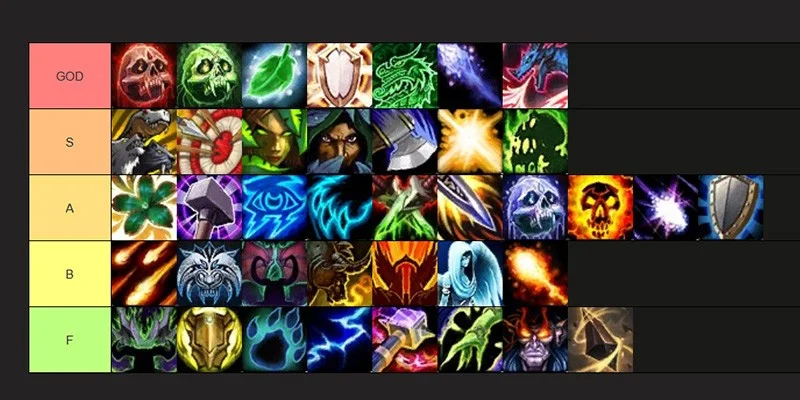
Havoc Demon Hunter
Havoc stays reliable as a well-rounded melee DPS, even with the new Devourer spec drawing attention away.
The core strengths are all there: mobility to stick to targets, utility, double stun, Imprison, AoE options, and a Mortal Strike effect. The damage profile is "oozing," ramping up over time and becoming increasingly hard to heal as dampening kicks in and Mortal Strike stacks up. Eventually it just becomes unhealable.
CC is solid but not overwhelming: stun, Imprison, and Fear, with a talent boosting stun duration on the primary target. No spammable CC, so it's not reaching S Tier on control alone.
Havoc is fundamentally sound without a standout feature pushing it over the top. It doesn't have spammable CC, and while damage is consistent, it lacks the explosive burst or unique mechanics that S Tier specs bring.
Devourer Demon Hunter
The new Demon Hunter spec brings a scary damage profile that still threatens hard even after significant nerfs.
Pre-patch Devourer was absurdly broken, literally one-shotting people through Voidsurge and related hero talent mechanics. Those got nerfed hard (Voidsurge by about 50%, other mechanics by 25-30%), bringing it from "instantly kills you" to "bursty and tough to heal through." That's still very good.
Devourer damage is mostly ranged, instant-cast, and unkickable thanks to a PvP talent. You can't kite ranged damage, you can't kick instant casts. During Void Metamorphosis, the damage feels like Dev Evoker's Dragonrage on a melee chassis: spiky, hard to heal through, hard to avoid.
The spec lacks a Mortal Strike effect, which is a notable gap. But Dev Evoker proved you don't necessarily need one to be powerful. With the option to run the Annihilation hero talent tree (now that VoidScarred got nerfed), you can pick up three charges of targeted blink for excellent sticking power, and the CC toolkit mirrors Havoc's.
Retribution Paladin
Ret is a melee with ranged abilities, exactly the archetype that thrives in season-one melee metas.
Pruning happened, but it didn't touch what makes Ret fundamentally effective. You still have ranged damage output, ranged burst, Wake of Ashes granting wings on every press, passive Crusader Strike filling Holy Power, and the full Paladin utility suite: Blessing of Spellwarding, Blessing of Sacrifice, Divine Shield for immunity, Lay on Hands for a full heal.
The Searing Glare vs. Blinding Light tradeoff forces a choice between CC and a powerful ability, but either way Ret has tools to win games. The win condition pattern is timeless: deal damage with short-cooldown burst through Wake/Wings, survive to late dampening with immunities and a full heal, then close out kills when your damage really shines. Or just Bubble offensively to force one.
Judgment turning into Hammer of Wrath during Wings means losing a separate button, and with low Haste early on, the rotation might stall briefly. But that's a minor concern for a spec with this many other strengths.
Affliction Warlock
Affliction lands at the bottom of A Tier, held back by stat dependency but carrying one of the most exciting redesigns in the expansion.
The rework brings back stackable Unstable Afflictions, AoE DoT pressure, and introduces the Wither mechanic with Malevolence. These are ramping DoTs reminiscent of old Necrotic Plague from Unholy DK. You funnel extra rot pressure by stacking four or five UAs on a kill target, which doubles as dispel protection while amplifying single-target damage. Swapping rot pressure to targets without active defensives creates situations where the damage eventually becomes overwhelming and someone just rots to death.
This is one of the coolest designs in the expansion, a spec that actually gained complexity and interesting decision-making during a pruning patch. The combination of 15-stack Wither for AoE pressure and stackable UAs for single-target amplification gives you multiple avenues to create kill conditions.
Affliction has always scaled with secondary stats though. At the start of the expansion, the engine won't be running full speed. Expect this to climb significantly as gear improves. It's a strong candidate for S Tier by season's end.
Marksman Hunter
Coming off being arguably the best spec at the end of The War Within, Marksman drops to low A Tier in Midnight. Still strong, just noticeably less dominant.
The upfront burst and 100-to-zero kill threat are still there. Mortal Strike, strong CC through stun and Freezing Trap, and ranged damage all remain.
The drop comes from losing end-of-expansion stats. Without 50-60% Mastery, 30% Versatility, and meaningful Crit for damage modifiers, Marksman loses what made it truly terrifying. The one-shot potential exists, but if the target survives the initial burst, sustained throughput afterwards feels limited. You won't have the crushing pressure that high Mastery provided.
On top of that, Marksman lost High Explosive Trap (knockback), reducing its ability to peel and create space. Without the counter-pressure of an overwhelming one-shot, you might find yourself getting trained all game.
Frost Death Knight
Frost DK got a rework that makes its rotation extremely fluid, but it needs number tuning to really compete at the top.
The reworked rotation feels great to play. You've got strong utility with AoE grip (Gorefiend's Grasp) into AoE bind into silence, creating a powerful kill setup. That grip-bind-stun-silence chain creates windows where enemies simply can't respond.
Frost lacks spammable CC though. Burst damage isn't as oppressive as it once was, and out-of-pillar sustain is decent but not scary. Without a Mortal Strike effect, you're depending on Solo Shuffle teammates to provide healing reduction. Losing 40-yard grip range is significant, as healers previously couldn't avoid the go since you could max-range grip them. Now they have more room to position safely. PvP talents feel underwhelming, with Delirium (which may still not work on Evoker abilities), Strangulate now being a choice node with the 40-yard range grip, and options like Shroud of Winter and Bitter Chill not inspiring much confidence.
Multi-Rank 1 DK players have said Frost feels roughly comparable to Unholy in power level. If experienced hands think it's close to an S Tier spec, A Tier is a justified floor.
B Tier
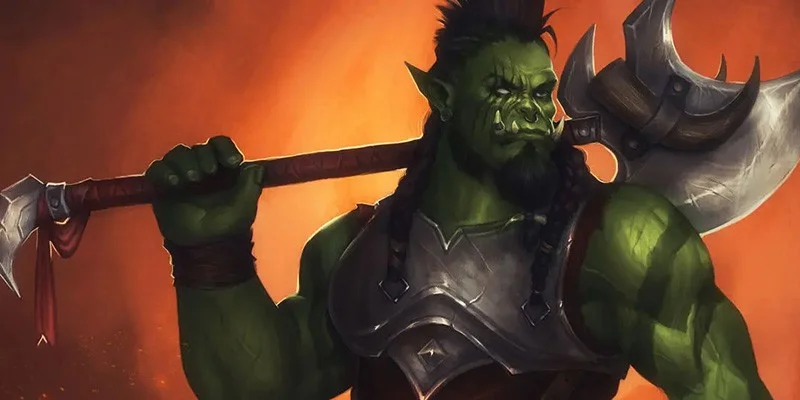
Arms Warrior
Arms is the top B Tier spec and potentially underrated by the community.
A new Heroic Strike capstone gives strong on-demand burst that could hit hard early in the expansion. Arms might be slightly tankier too, and with opponents having fewer secondary stats, rot pressure against Warriors should be less punishing than in late-expansion environments.
You keep decent mobility, strong CC (Storm Bolt, Shockwave, and Fear, a physical fear that can't be dispelled), and versatile PvP talent options.
Arms still puts out less raw damage than Fury and suffers from kiting. But with many classes losing CC and Rogues specifically losing unlimited Cheap Shots, having Storm Bolt and Shockwave is worth more than usual. Fear remains excellent since so many classes simply can't remove it.
Restoration Shaman
Resto Shaman sits at the very top of B Tier, held back by its need for Mastery to really shine.
The Mastery has always been perfectly tuned for PvP: the lower a target's health, the more healing they receive. Once pacing slows down (which it generally does by the time Resto Shaman gets going), every time someone drops low, you top them. They get low, you top them. You drag games to dampening and then outheal everyone because your Mastery makes healing stronger the lower people are, exactly when dampening hits hardest.
Despite pruning, the toolkit is still impressive: Wind Shear, Purge, Hex, Lightning Lasso, Capacitor Totem, and a PvP talent granting Nature's Swiftness with an increased cooldown for instant-cast Hex. Landing that NS Hex on an off-DR with no trinket available can end games on the spot.
Without the 100%+ Mastery that comes at expansion's end, throughput can't match Mistweaver, Holy Paladin, or Resto Druid right now. Resto Shaman gets significantly better as gear improves throughout the expansion.
Enhancement Shaman
Enhancement sits in B Tier with solid burst and self-sustain but missing the tools that higher-tier melee bring.
The core burst pattern is intact: Ascendance combined with Doom Winds procs and Thorim's Invocation frontloading all damage into a ranged explosion. Self-sustain is strong thanks to a PvP talent that channels Maelstrom spending into Healing Surge, letting you deal damage and heal simultaneously rather than sacrificing one for the other. Some new capstone talents rearrange and bake effects together, like Doom Winds becoming a proc during Ascendance.
Over the last two expansions, Enhancement has shown it can play both burst-oriented and sustained grindy builds, dragging matches to deep dampening while being extremely tanky before grinding out a kill.
No Mortal Strike effect, limited spammable CC, and a damage profile that's heavily cooldown-dependent are what hold it back. Strong during Ascendance, noticeably weaker outside of it. Higher-tier melee like Survival, Windwalker, and Sub Rogue just have more complete toolkits.
Discipline Priest
Disc is genuinely difficult to rate for Midnight, landing somewhere on the border of A and B Tier.
The Voidweaver hero talent tree that dominated The War Within suffers from the stat problem. Voidweaver's engine relies on snowballing damage-into-healing quickly, and with low stats, that engine is too slow to get going. Falling behind on healing when your entire mechanic depends on being ahead is a real problem.
Oracle offers a different path with bigger shields and more emphasis on healing buttons rather than damage, which should be more reliable in season one. Shields are especially valuable in Solo Shuffle because absorb effects ignore dampening.
The real concern is that Disc lacks spammable CC like Cyclone. It can't match Mistweaver's raw throughput. And it has no built-in setup for Fear, while other healers all have instant CC setups (Resto Druid gets NS Cyclone, Mistweaver has Paralysis into Song of Chi-Ji, Preservation can Wall into Sleepwalk, Holy Priest has Chastise into Fear). Disc just has to land Fear raw, and in Solo Shuffle chaos, that doesn't always happen.
Destruction Warlock
Destro is honestly one of the hardest specs to call for Midnight, and this placement comes with a big asterisk of uncertainty.
New Soul Fire synergy talents and interesting capstones are there, and the Conflagrate/Shadowburn combo still provides instant damage. All the standard Warlock defensives remain.
The concern is that Destruction likely needs to get casts off, especially with new capstone talents, and low Haste in season one makes that rough. There may be enough instant-cast generators to compensate, but real uncertainty exists about whether the damage profile holds up in practice.
This is somewhat of a placeholder rating. Destruction is notoriously hard to predict at expansion launches.
Holy Priest
Holy Priest took heavy pruning and lands in the middle of B Tier.
Shadow Word: Pain is gone (minor but annoying loss of passive damage), and more importantly, Ray of Hope is gone. Losing Ray of Hope removes a critical defensive cooldown for surviving burst windows.
On the positive side, Holy has Chastise into Fear as a CC setup (which Disc lacks), is less vulnerable to CC than Disc, and has straightforward throughput-based healing.
The fundamental issue is that Holy Priest's output is pure throughput healing, which means dampening wrecks it as games go long. No absorb shields to ignore dampening like Disc has. No Ray of Hope for defensive cooldowns. No Ironbark. Not the impactful cooldowns of Mistweaver. When the pacing pushes toward dampening, pure throughput healers get hit the hardest.
Arcane Mage
Arcane lands at the top of B Tier, lower than some expect, primarily because of the one-school vulnerability and stat concerns.
Arcane has always been a lower-representation spec, which means less community testing and optimization compared to heavily played specs. Losing Blast Wave and Shifting Power (a cooldown reset that also dealt damage) thins the toolkit further.
The core issue is simple: Arcane has one school of magic for both damage and CC (Polymorph). When the likely meta melee specs (Survival Hunter, BM Hunter, Unholy DK) decide to train you, one interrupt locks out everything. Damage and crowd control, gone simultaneously. Survival's ranged damage, BM's pets, Unholy's pets and ranged pressure all make life miserable when you can't cast on a second school to stay in the fight.
Some players have spoken highly of Arcane, and it may perform better than this placement suggests. But the vulnerability to getting trained by the probable top melee specs is a serious problem.
Shadow Priest
Shadow lost two significant tools, its stun and Void Shift, which drops it to mid-B Tier.
Damage output is still excellent, and you still have Silence plus Cascading Horrors (a PvP talent that makes Void Eruption send out slow-moving Shadow bolts dealing AoE damage and causing targets to flee in Horror). That AoE CC is tough to deal with, and rot pressure remains legit.
Losing the stun means Shadow can no longer set up its own Fear easily, or at all in many situations. Void Shift was a unique team utility button for swapping health percentages with a teammate. Both were significant in Solo Shuffle, where self-sufficiency matters enormously.
Shadow's damage will get better as stats improve through the expansion, but for season one, the loss of setup tools hurts its ability to independently find wins.
Feral Druid
Feral doesn't quite make A Tier, sitting in B with some structural issues holding it back.
Rot pressure through Tear and AoE Rip can melt targets stacked on top of you, especially against pet-heavy comps where AoE damage feeds procs. Cyclone is still fantastic CC.
The problem is that Feral does what other specs do, just slightly worse. Single-target burst? Sub Rogue does it better. AoE rot? Unholy and Affliction outclass you. Cyclone access isn't as effective as a Boomkin's since Boomkin has 45-yard range on everything and can swap Cyclone targets while pressing damage from safety. As a melee, Feral is vulnerable to dying in a stun, and several specs look well-positioned to do exactly that.
Not many changes came to Feral, and experienced Feral players haven't shown much enthusiasm.
Elemental Shaman
Elemental sits in B Tier, and even that might be generous given its current state.
Burst potential through Ascendance is still there, and Hex is a strong CC button. Lava Burst remains the bread and butter for proc-based pressure.
But Elemental got hit hard. Heavy pruning, Primordial Wave gone, and Stormkeeper doesn't feel impactful (there's likely still a PvP modifier reducing the Stormkeeper/Lightning Bolt engine). The whole spec runs on Haste to get instant casts, procs, and consistent pressure going, and in season one, that Haste just isn't there. If you can't get casts off, you're in serious trouble. Limited mobility, limited CC beyond Hex, and vulnerability to melee training all compound the issue.
Multiple problems are stacking up at once: pruning, PvP modifiers on remaining tools, Haste dependency, and melee vulnerability.
Preservation Evoker
Preservation lands mid-B Tier, though some in the community rate it even lower.
Some genuinely interesting tools exist here. Double Verdant Embrace combined with the Nullifying Shroud PvP talent lets you eat two different CCs just by using a rotational ability on a short cooldown. In Solo Shuffle's chaotic environment where opponents throw out CC randomly without coordination, eating major CC cooldowns through Nullifying Shroud could be huge. Wall provides silence protection against blanket silences too.
The concerns are real though. Rebound healing can backfire in Solo Shuffle because teammates often panic and pop defensive cooldowns when they're low, causing overlap with your rebound heal. Without communication, people use defensives reactively, and Preservation's healing patterns don't align well with that behavior. Emerald Communion becoming a PvP talent rather than baseline is also significant. This channeled ability restoring health and mana while transferring overhealing to injured allies was a core healing tool, and having to spend a PvP talent slot on it may be why many players rate Preservation poorly. Playing alongside a Preservation Evoker can just feel uneasy for teammates who don't understand the healing style.
C Tier
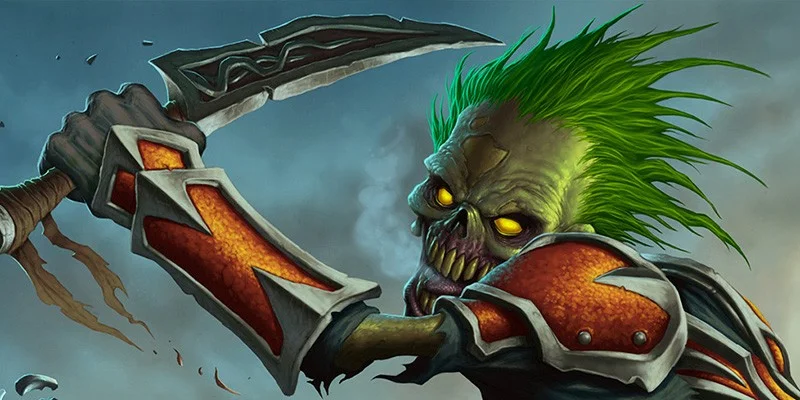
Assassination Rogue
Assassination was once oppressive but enters Midnight at the top of C Tier after major changes.
The triple Garrote AoE silence is gone. Serrated Bone Spike is gone (that was easy DoT application). Kingsbane feels underwhelming at current tuning. Applying DoTs to multiple targets now requires individually Garroting each one and then spreading with Crimson Tempest, which needs targets to be stacked. If you get CC'd and they spread out, your Crimson Tempest spread misses entirely.
Shiv still gives you a strong Mortal Strike effect, and it's still Assassination Rogue at its core. But the power level has clearly dropped. The four-poison build is back without feeling like a major damage contributor.
The new Implacable Apex capstone that buffs Kingsbane (rapidly striking the target for Physical and Nature damage while applying Lethal Poisons) could lift the spec if it proves stronger than expected in practice.
Outlaw Rogue
Outlaw received a massive damage buff to address underperformance. Structural issues remain.
Even after the buff, Outlaw has an all-physical damage profile, which is inherently weak in PvP. Opponents can mitigate it with armor and physical damage reduction. The two Cheap Shot charge cap hurts Outlaw more than Subtlety because Sub has the burst to kill within those two stuns, while Outlaw doesn't generate enough pressure to capitalize.
Preparation as a full offensive cooldown reset sounds great in theory, but when your offensive cooldowns bring you from low damage to moderate damage, the reset doesn't feel meaningful. Outlaw's PvP damage has historically been lacking, and while the control toolkit is strong (double Cheap Shot, Blind, Gouge, mobility), those tools matter more in Battlegrounds than arena.
Fire Mage
Fire Mage is in a rough spot heading into Midnight, with big losses and nothing to show for them.
Phoenix Flames is gone with no replacement. The rotation is now effectively three buttons, one of which is a slow-cast Fireball that doesn't deal impressive PvP damage, especially without secondary stats. Shifting Power is also gone from all Mages, and that was the cooldown reset that let Fire cycle through its six combined charges of Fire Blast and Phoenix Flames. Now you have three charges of Fire Blast and no reset.
The broader PvP trend is instant-cast damage: Devourer surging from range, Survival raining bombs, BM pets pumping passively. Fire Mage moving toward hard-cast Fireball goes against the current. Most casters have moved away from casting, and Fire is being pushed further into it.
A massive PvP modifier on Fireball (potentially 300% or more) making each cast devastating with a big Ignite could turn Fire into old-school Fire where getting a Fireball off was game-changing. But that specific tuning attention hasn't happened yet.
Augmentation Evoker
Aug gets a conservative rating based on its track record in PvP.
The fundamental design creates a paradox: Aug's value comes from buffing allies, so it's only as good as what it plays with. People always play strong specs, so Aug is always "good" in theory since it amplifies whatever's already working. Blizzard has consistently responded by applying PvP modifiers that reduce Aug's buff effectiveness, keeping it from getting out of hand.
Since its debut season, Aug has been largely underwhelming in PvP. It was up and down throughout The War Within, trending downward by expansion's end. Anytime the buffs feel too strong, PvP modifiers knock them back. With this many specs in the game, it seems unlikely that the developers want Augmentation to be a premier PvP spec.
This rating leans on historical patterns more than specific Midnight analysis. But the trend has been consistent enough to justify the prediction.
Tanks in PvP
Tank specs are not individually ranked in this tier list. Their representation in Solo Shuffle is extremely low, cutoffs are minimal, and there just isn't enough data or testing to provide a meaningful hierarchy. There's certainly an ordering to how valuable each tank is in Solo Shuffle, but calling that out confidently would require far more games played than what's available right now. If any tank specs become oppressive as the season develops, this may be revisited.
Key Takeaways and Meta Predictions
The healer hierarchy. Mistweaver and Holy Paladin lead based on their combination of instant-cast throughput (critical with low Haste) and impactful cooldowns. Restoration Druid is close behind. Resto Shaman will scale up dramatically as gear improves. Disc and Holy Priest have workable toolkits but face more headwinds. Preservation Evoker could surprise people, but its communication-dependent healing patterns don't mesh well with Solo Shuffle's lack of coordination.
Pruning wasn't equal. Some specs were barely touched (Balance Druid, Survival Hunter), while others got gutted (Fire Mage, Assassination Rogue, Holy Priest). Specs that kept their core tools have a real advantage over those that lost critical abilities.
Tuning will change everything. Multiple specs on this list could move an entire tier with a single tuning pass. Fire Mage could become viable with a big Fireball PvP modifier. Assassination could improve if the Implacable capstone synergy with Kingsbane proves stronger in practice. The biggest PvP tuning will likely arrive after launch, once the dev team has a full pool of player data to work with.
Quick Reference Tier Summary
| Tier | Specs (Ranked Left to Right) |
|---|---|
| S Tier | Survival Hunter, Subtlety Rogue, Demonology Warlock, Beast Mastery Hunter, Unholy Death Knight, Mistweaver Monk, Holy Paladin, Windwalker Monk |
| A Tier | Frost Mage, Fury Warrior, Devastation Evoker, Balance Druid, Restoration Druid, Havoc Demon Hunter, Devourer Demon Hunter, Retribution Paladin, Affliction Warlock, Marksman Hunter, Frost Death Knight |
| B Tier | Arms Warrior, Restoration Shaman, Enhancement Shaman, Discipline Priest, Destruction Warlock, Holy Priest, Arcane Mage, Shadow Priest, Feral Druid, Elemental Shaman, Preservation Evoker |
| C Tier | Assassination Rogue, Outlaw Rogue, Fire Mage, Augmentation Evoker |