

Marksmanship Hunters changed dramatically between Classic WoW and The Burning Crusade. In Classic, Hunters dealt with awkward gaps in their rotation and often relied on melee weaving just to fill dead time. TBC fixed this by introducing Steady Shot, an ability with a short cast time and strong Attack Power scaling that quickly became the backbone of Hunter gameplay. It's your go-to filler ability and actually outdamages most other shots over time.
This guide covers everything you need to build and play a Marksmanship Hunter in TBC raids and dungeons.
Standard Marksmanship Talent Build: 14/44/3
The recommended PvE talent setup is 14/44/3. Most of your points go into Marksmanship, with supporting investments in Beast Mastery and a small dip into Survival.
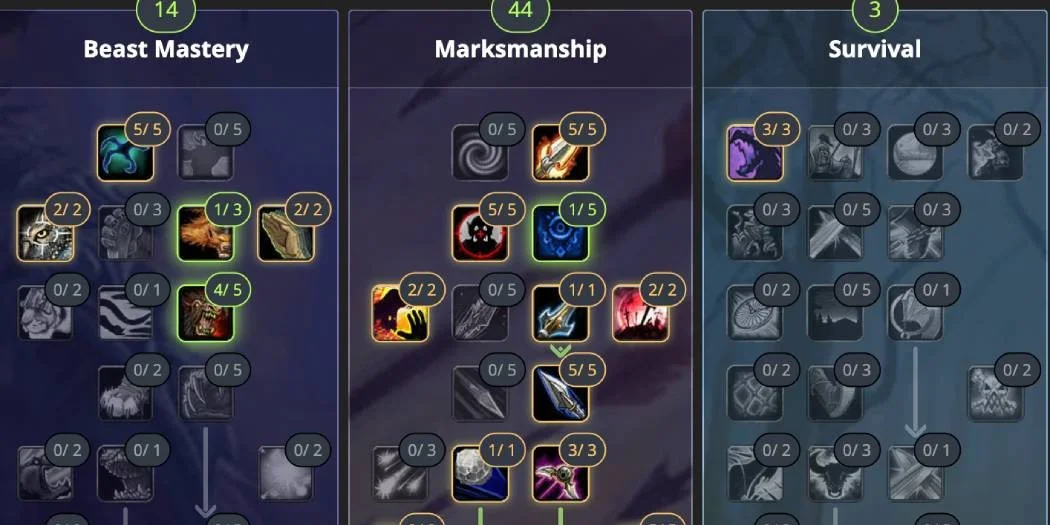
Beast Mastery Tree (14 Points)
Even as a Marksmanship Hunter, putting 14 points into Beast Mastery gives you solid damage increases that add up over a fight.


Survival Tree (3 Points)
A small investment here adds meaningful damage against specific enemy types.
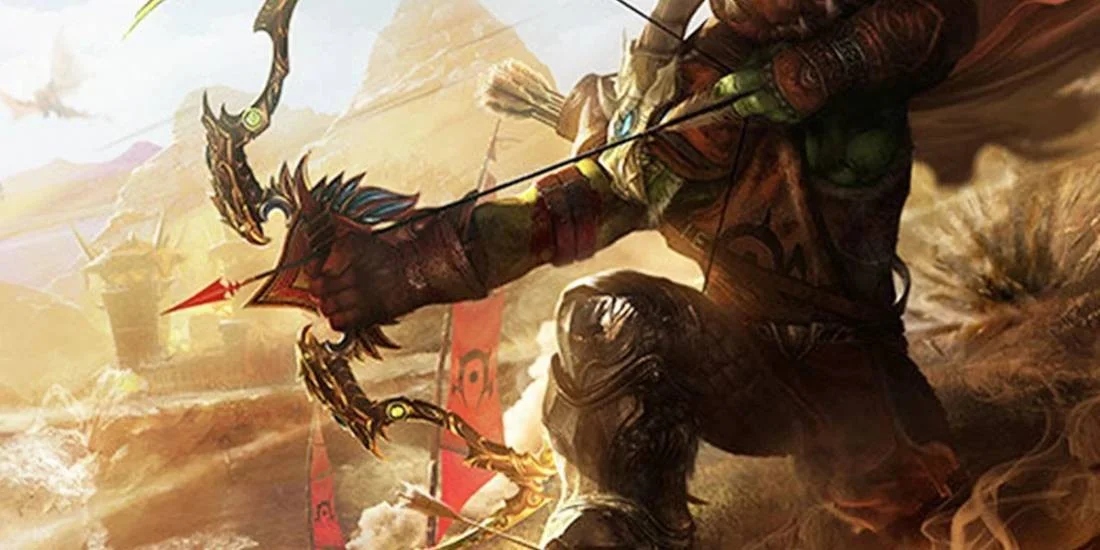
Marksmanship Tree (44 Points)
This tree provides most of your damage talents and your core abilities.
| Talent | Points | Effect |
|---|---|---|
| Lethal Shots | 5/5 | Increases ranged crit chance by 5% - mandatory pickup |
| Improved Hunter's Mark | 5/5 | Improves Attack Power bonus from Hunter's Mark (only if you apply it) |
| Efficiency | 0/5 or 5/5 | Lower mana costs - take instead of Improved Hunter's Mark if not needed |
| Go for the Throat | 2/2 | Your crits give pet 50 focus for more special ability usage |
| Aimed Shot | 1/1 | Hard-hitting shot with healing reduction debuff |
| Rapid Killing | 2/2 | Cooldown reduction on Rapid Fire |
| Mortal Shots | 5/5 | Crit damage bonus increased by 30% |
| Scatter Shot | 1/1 | CC ability - required to unlock Trueshot Aura |
| Barrage | 3/3 | 12% damage increase to Multi-Shot |
| Combat Experience | 2/2 | 4% increase to total Agility and Intellect |
| Ranged Weapon Specialization | 5/5 | Flat 5% increase to all ranged weapon damage |
| Careful Aim | 3/3 | Gain Attack Power based on Intellect |
| Trueshot Aura | 1/1 | All party members get Attack Power boost - mandatory for groups |
| Improved Barrage | 3/3 | More damage and crit chance to Multi-Shot |
| Master Marksman | 5/5 | Capstone talent - increases total Attack Power by 10% |
Talent Flexibility
The 14/44/3 build has several flexible points you can adjust based on your raid composition and preferences.
If Another Hunter Handles Hunter's Mark
When someone else applies Hunter's Mark with the improved talent, you free up five points. Put all five into Efficiency for lower mana costs. You'll have one leftover point that can go into:
- Silencing Shot if your raid needs another interrupt
- Monster Slaying or Humanoid Slaying for more personal damage against specific enemy types
- Other Survival talents for additional utility
Pet Damage Reallocation
If your pet isn't contributing much damage even with Unleashed Fury, you can pull those four points plus the single Thick Hide point (five total) and put them elsewhere. Efficiency and Monster Slaying or Humanoid Slaying are good choices if you'd rather invest in your own damage instead of pet damage.

Core Rotation Mechanics
Marksmanship Hunter rotation in TBC revolves around one core concept: weaving Steady Shot between Auto Shots so you maximize damage without clipping either ability.
Auto Shot and Steady Shot Interaction
Auto Shot fires automatically based on your weapon speed (adjusted by haste effects). Steady Shot has a cast time you control manually. Your goal is to cast Steady Shot in the gaps between Auto Shots without delaying your next Auto Shot.
Classic WoW had a notorious "1-button macro" that automated most of this for near-optimal damage. TBC runs on the modern game client, so that macro doesn't work anymore. You'll need to manage your rotation manually, timing Steady Shot casts around your Auto Shot rhythm.
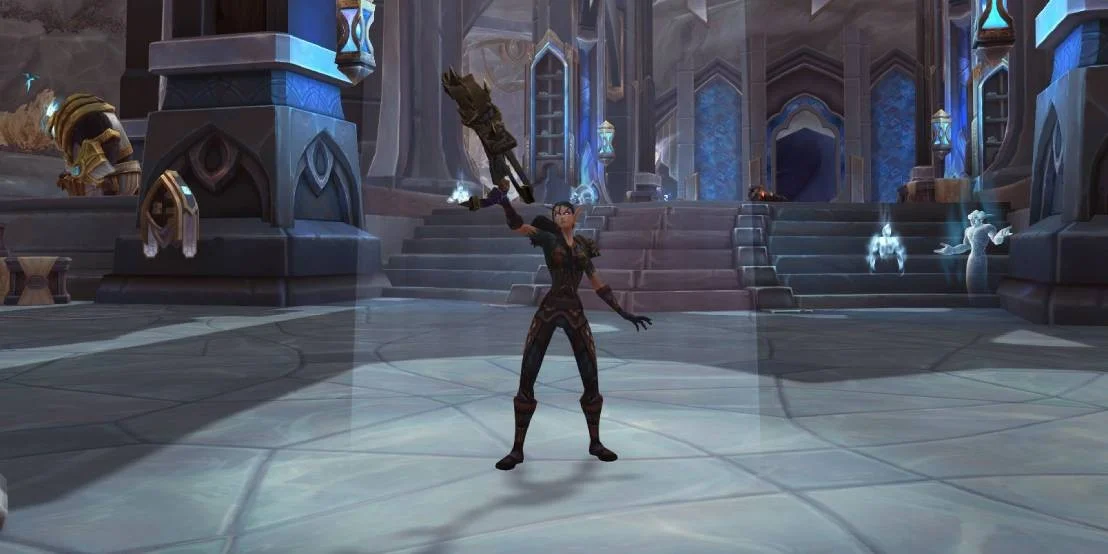
Additional Rotation Abilities
Two other abilities factor into your regular rotation beyond Steady Shot and Auto Shot:


Weapon Speed and Rotation Ratios
Your ideal rotation depends on your weapon speed after haste. Different speeds call for different ratios of Steady Shots to Auto Shots.
1:1 Rotation (Fast Weapons)
If haste brings your weapon speed down to around 1.5 seconds between Auto Shots (from something like a 2-second base), you can run a simple 1:1 rotation where you alternate between Steady Shot and Auto Shot continuously.
1:1 Rotation Sequence
 Auto Shot
Multi-Shot
Auto Shot
Auto Shot
Multi-Shot
Auto Shot
 Steady Shot
Use Kill Command whenever it becomes available after a crit, regardless of where you are in the rotation. Use Multi-Shot on cooldown, otherwise use Steady Shot.
1:1.5 Rotation (Slower Weapons)
Most Hunters will use this rotation with slower bows (around 2.8-3.0 second base speed). With haste, these typically reach 2.2-2.4 seconds between Auto Shots. This lets you fit two Steady Shot casts, or one Steady Shot plus one instant, between every two Auto Shots.
1:1.5 Rotation Sequence
Auto Shot
Steady Shot
 Multi/Arcane
Auto Shot
Multi/Arcane
Auto Shot
This rotation fills your time completely so you're never waiting around for abilities, while also never delaying your Auto Shots. The instant cast fires while you're still on the global cooldown from Multi-Shot or Arcane Shot.
Area of Effect Damage
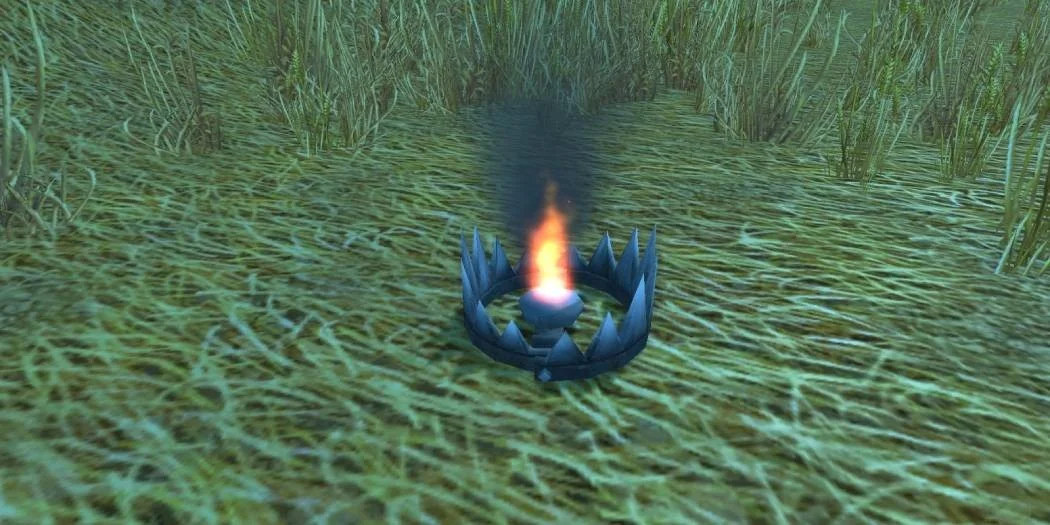
Hunters have limited but effective AoE options in TBC. Being able to use traps in combat opens up possibilities that didn't exist in Classic.
| Ability | Target Threshold | Usage Notes |
|---|---|---|
| Multi-Shot | Any number | Already part of single-target rotation - becomes even better against multiple enemies |
| Explosive Trap | 7+ targets | Solid AoE burst tool - only worth using above threshold |
| Volley | 10+ targets | Only when Explosive Trap and Multi-Shot are on cooldown |
Pull Sequence and Opener
Getting the most damage at the start of a fight requires proper preparation and ability sequencing. Two things matter: cooldown timing and a pre-pull Aimed Shot.
Why Pre-Pull Aimed Shot Matters
Aimed Shot is your hardest-hitting ability, but its long cast time means Steady Shot provides better sustained DPS during normal rotation. On pull, this cast time penalty disappears. You can start casting Aimed Shot during the countdown before the boss is engaged, timing it to land exactly as the fight begins. You get your strongest hit without losing any rotation time.
- Hunter's Mark (if you're the designated Hunter applying it)
- Misdirection on the tank - your opening burst deals serious damage and threat
- Aimed Shot - start casting so the shot lands exactly as the pull timer hits zero
- Distracting Shot (optional) - highest-threat shot transfers threat to tank via Misdirection
- Racial cooldowns - Blood Fury for Orcs, or other applicable racials
- Rapid Fire - your main DPS cooldown
- Normal rotation - transition into standard Steady Shot weaving
Melee Weaving in TBC
Melee weaving was common for Classic Hunters, who ran into melee range during rotation gaps to land Raptor Strike attacks for extra damage. In TBC, this technique is significantly less practical.
- Tighter Rotation Windows: Steady Shot and increased haste availability leave far less downtime than Classic
- Weapon Conflicts: Effective melee weaving requires a hard-hitting two-handed weapon, but dual one-handers with Adamantite Weightstones are optimal
- Risk vs. Reward: Even perfect melee weaving provides only a tiny DPS increase - imperfect execution can cost damage
For players determined to incorporate melee weaving despite these drawbacks, you'll need to find a Steady Shot to Auto Shot ratio that includes enough time for a Raptor Strike within the cycle. This only works on encounters where you can consistently stand exactly 5 yards from the boss.
Movement and Situational Play
Maintaining damage while handling mechanics means knowing which abilities you can use on the move.
Moving While Dealing Damage
Steady Shot requires you to stand still. During movement, you lose access to your main damage ability. You can still use instant casts while moving to keep some damage going:
- Multi-Shot (your highest-damage instant)
- Arcane Shot (solid damage when Multi-Shot is on cooldown)
- Serpent Sting (a DoT that keeps dealing damage while you move)
For brief movement, try a stutter-step approach: move for a moment, stop briefly to let your Auto Shot fire, then continue moving. This keeps some passive damage flowing even during extended movement phases.
Mana Management with Aspect Swapping
If you're running low on mana during long encounters, swap from Aspect of the Hawk to Aspect of the Viper. Viper provides strong mana regeneration at the cost of reduced damage. Your damage drops during Viper, but being able to keep casting Steady Shot beats running completely dry. Swap back to Hawk once your mana has recovered.
Pet Management and Macros
Effective pet management requires active input. Pets in TBC don't manage themselves well and need direction to perform at their best.
Useful Pet Macros
Wind Serpent Setup
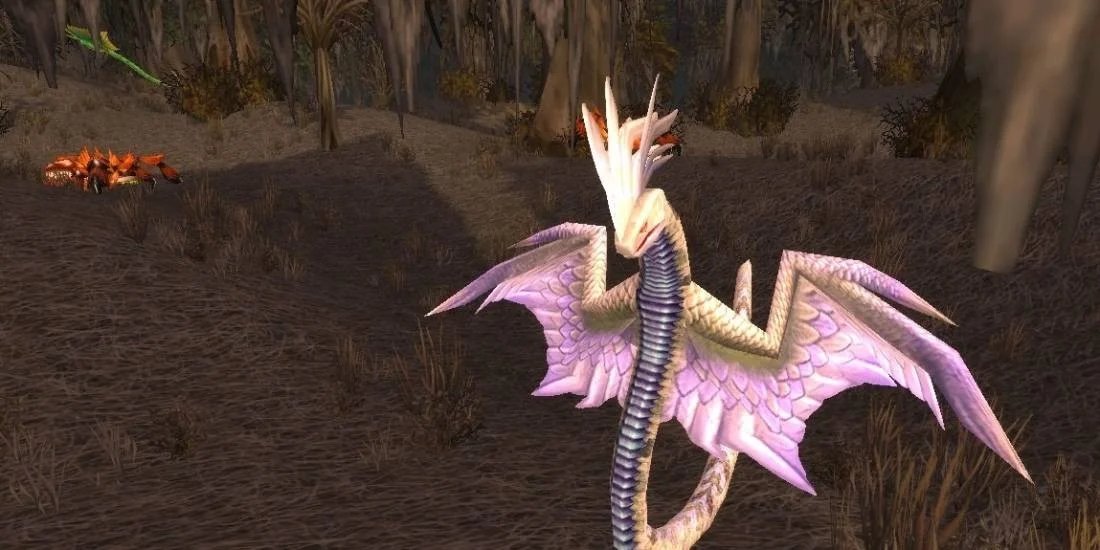
If you use a Wind Serpent as your pet, you'll need some extra macro work. Wind Serpents use Lightning Breath as their main damage ability, but on their own, they won't cast it often enough to maximize damage.
Adding "/cast Lightning Breath" to your rotation macro forces your Wind Serpent to use this ability as much as possible. This setup is specifically necessary for Wind Serpents. Other pet families don't require this level of micromanagement.
Quick Reference Summary


