Valorant Mobile has surpassed 50 million monthly active users in China, making it the country's biggest mobile game launch of 2025. With the Chinese National Finals wrapping up in December, a global release looks increasingly likely for early 2026.
Riot Games and Tencent haven't confirmed an official worldwide release date. But momentum is building toward an announcement.
Global Release Timeline
The game launched exclusively in China on August 19, 2025, nearly four years after Riot first announced the project in June 2021. That long development cycle seems justified given the player numbers in China.
For everyone else, the wait continues. Early speculation pointed to a late 2025 global beta, but that window passed without any announcement. Industry observers now expect a global beta or soft launch in early 2026, with wider availability following once Riot confirms server stability across regions.
Pre registration is currently live only in China through WeChat and QQ. No sign up options exist for other regions yet. Some players outside China have accessed the game through VPNs, but this remains unofficial and unsupported.
China Launch Numbers
The Chinese launch exceeded expectations across the board. Within 24 hours, Valorant Mobile pulled in $1 million in revenue and 170,000 downloads. Growth has only accelerated since then.
Tencent's Q3 earnings report confirmed the game exceeded 50 million monthly active users. That performance helped drive a 15% year over year revenue increase for the company.
Why China First?
Anna Donlon, head of VALORANT Studios, explained the regional strategy directly: "China has one of the largest and most competitive mobile FPS communities in the world. Since Lightspeed is already a trusted developer in the region, we think it makes sense to start more locally, where their mobile expertise shines, before we finalize our plans to expand to other regions."
This makes sense beyond just market size. Launching in China first lets Riot and Lightspeed (Tencent's development studio) work out technical issues before expanding globally.
Device optimization also plays a role. China's top smartphone brands (Vivo, Huawei, Xiaomi) differ from Western markets. The Vivo X200 Pro, Huawei Pura 70, and Xiaomi 15 Ultra are the primary optimization targets for now. iPhone and Samsung devices will likely get more attention as the global rollout approaches.
Regional Rollout
Riot hasn't confirmed which regions come next. Based on industry analysis, the likely early candidates include South Korea, the United States, Japan, and the United Kingdom. These represent the largest mobile gaming markets outside China.
Chinese mobile games sometimes run closed alpha tests in the US and Canada before worldwide rollout. North America could be among the first regions to get access.
Gameplay Changes
Valorant Mobile isn't a shrunk down port of the PC game. Riot rebuilt it specifically for touchscreen, reworking aiming, movement, and abilities to feel right on mobile while keeping the tactical gunplay intact.
Controls
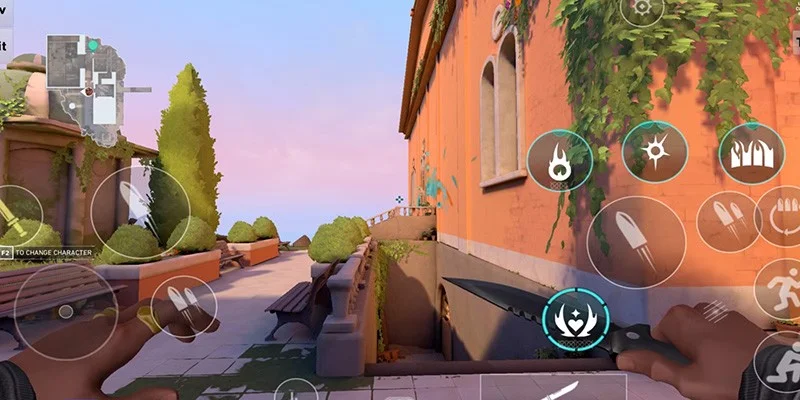
The touch control system covers all the basics. A virtual joystick handles movement, with varying speed levels rather than the binary moving or stopped state of PC. Riot focused heavily on making "dead stopping" for accurate shots feel responsive.
Combat controls include dedicated buttons for firing, aiming down sights, reloading, and crouching. Unlike some mobile shooters that auto fire when aiming at enemies, Valorant Mobile keeps manual fire control.
Abilities use specialized on screen buttons with limited screen space in mind. Some abilities use swipe to cast mechanics, like Jett's dash. Cooldowns appear as draining and filling circles for quick visual feedback.
Match Length
Matches target a 15 to 20 minute window to fit mobile gaming habits. That's faster than PC match lengths, though the round based structure stays the same.
Visuals
Pre release footage and beta testing show the game looks faithful to its PC version. The cell shaded art style translates well to mobile hardware, and early assessments suggest no major visual downgrade. Various graphics settings should be available, similar to how the PC version scales.
Agents and Maps
Agent Roster
The confirmed agent roster includes:
- Breach
- Jett
- Raze
- Brimstone
- Phoenix
- Sage
- Sova
- Viper
- Cypher
- Reyna
- Killjoy
- Skye
Several PC agents are missing at launch: Gekko, Deadlock, Iso, Clove, Tejo, Vyse, Fade, and Chamber. Riot hasn't explained why or confirmed when they might be added.
Weapons for confirmed agents appear identical to their PC versions. Beta testing shows what observers call a 1:1 comparison with the console and PC game.
Maps
Eight maps ship at launch: six from PC and two built exclusively for mobile.
From PC: Ascent, Bind, Haven, Breeze, Split, and Fracture.
Mobile Exclusive: Shipyard (an industrial setting with crates, palm trees, and glowing energy cubes in a desert environment) and Ancient Village.
Beta analysis suggests Riot and Tencent plan to eventually bring all PC content to mobile, including every map and agent. Once content parity is achieved, a global open beta should follow within two to three months, based on the timeline seen with Valorant's console launch.
System Requirements
Riot hasn't released official specs for the global version. Reported requirements from testing phases suggest fairly modest hardware demands.
Android (Reported)
- Processor: Snapdragon 675, Hisilicon Kirin 970, Mediatek Helio G90T, or Exynos 8895
- RAM: 4GB
- OS: Android 7+
- Storage: 4GB minimum
iOS (Reported)
- Processor: Apple A11 Bionic or newer
- RAM: 2GB
- OS: iOS 11+
- Storage: 4GB minimum
These specs should be treated as provisional. They may be placeholders subject to change before global release. Early testing indicates the game runs smoothly on devices with around 4GB of RAM.
Riot typically builds games that run on modest hardware, and Valorant Mobile follows that pattern. Keeping requirements low means players in regions where flagship phones are less common can still participate. The game should include various graphics settings for players with more powerful devices.
Cross Platform Play
Cross play between Valorant Mobile and PC won't be available at launch. The input differences between mouse and keyboard versus touchscreen would create major balance problems in matchmaking.
Valorant Mobile can still build its own competitive scene. Mobile esports already thrives in several regions, and Valorant Mobile fits well into that existing infrastructure.
Business Model
Valorant Mobile is free to play, matching the PC and console versions. Downloads cost nothing, with revenue coming from optional cosmetics.
The game uses VALORANT Points (VP) as premium currency, consistent with the existing system. Character skins, weapon skins, knife skins, and bundles will be available at various price tiers.
Mobile gaming monetization sometimes differs from PC and console approaches. The mobile market hit $118 billion in 2024, with projections reaching $156 billion by 2029. Given that spending pattern, Riot may offer additional skins or mobile specific cosmetics to serve this audience.
Esports Investment
Riot Games and Tencent have committed 1.5 billion RMB (approximately £165 million GBP) to Valorant Mobile Esports.
The Chinese competitive scene has moved quickly since launch. The game's first LAN tournament already took place. A national circuit wraps up in December 2025. The format and scale suggest Riot wants to match the PC game's established competitive structure.
Outside China, competitive interest is building even without official support. Organizations like Nashes Esports and the VR Community Server are running practice sessions and unofficial mini tournaments. Official esports ecosystems can't develop elsewhere until the global launch happens, though. VPN based tournaments remain unsanctioned.
Development Approach
Valorant Mobile took years to develop rather than rushing to market. Riot partnered with Tencent, the global leader in mobile gaming infrastructure, to get it right.
The biggest challenge was translating Valorant's precise movement to touchscreen. Counter strafing and recoil control are core skills in Valorant. The development team had to build new systems letting touchscreen players achieve similar precision to mouse and keyboard users.
Initial technical tests showed a game that looks like its PC counterpart but runs on a completely redesigned backend. That underlying work means Valorant Mobile is built to last, not a quick port destined for obsolescence.
Anti Cheat
Cheating is a major concern for any competitive game, and mobile gaming has a rough history with exploits. Reports indicate Riot and Tencent are building strong security systems into Valorant Mobile as a core priority.
The approach likely involves a mobile version of Riot's Vanguard anti cheat. The goal is protecting the ranked ladder so player progression reflects actual skill rather than exploitation. Poor anti cheat has killed other mobile competitive shooters.
Localization Progress
Beta testing observations suggest Riot is preparing for global launch alongside primary development. Many Chinese server tests have featured English localization, indicating regional language support is being built in parallel rather than tacked on later.
This supports the theory that Riot wants content parity between mobile and PC before the global rollout. Once that milestone hits, the path to worldwide release becomes much clearer.
Pre Launch Expectations
Account Integration: Based on how Riot handles other games, players should be able to use their existing Riot ID on Valorant Mobile. This hasn't been officially confirmed for the global release.
Beta Registration: When Riot opens global sign ups, expect registration through Google Play pre registration, App Store pre orders, and official Riot announcements. Avoid unofficial registration links.
Replay System: A replay feature has been discussed but Riot hasn't confirmed how it will work globally. If it ships at launch, it could be valuable for competitive players reviewing their matches.
Looking Ahead
Valorant Mobile proved itself in China with record breaking numbers. The 50+ million monthly active users and strong revenue show real demand for a quality mobile tactical shooter.
Global players should expect access in early 2026, with wider availability following technical preparations and regional server deployment. The Chinese National Finals ending in December 2025 may trigger global expansion announcements.
The infrastructure is reportedly ready. Content is approaching PC parity. The competitive framework is already forming. Riot hasn't locked in specific dates, but a worldwide Valorant Mobile launch appears to be coming soon.
Players looking to prepare can follow official Riot channels for registration news. Fundamental game knowledge from the PC version will carry over directly to mobile competition.