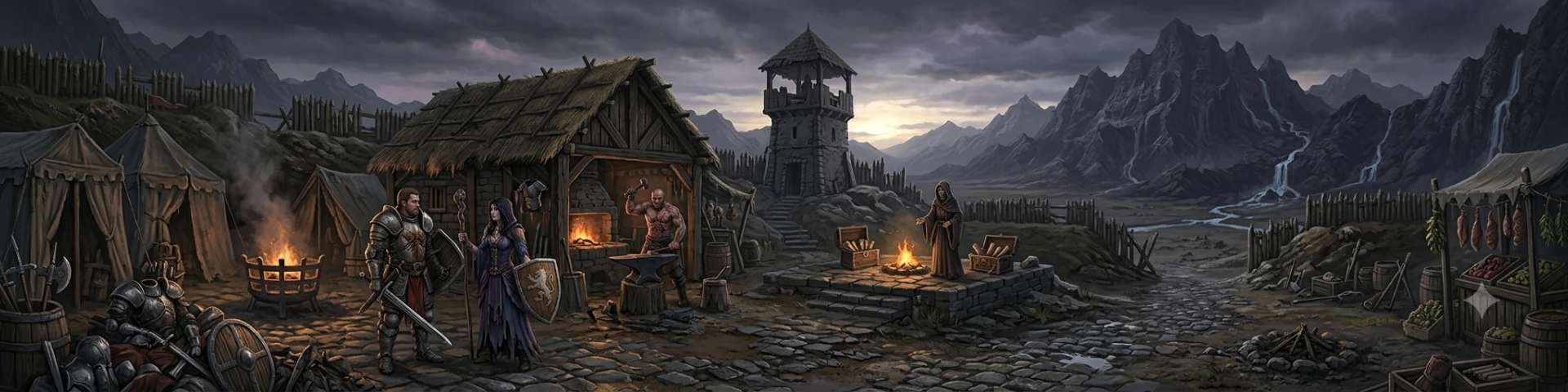
Diablo 2 Resurrected is a remaster of Blizzard's 2000 action RPG, rebuilt with modern visuals and online play while keeping the original systems intact. You pick one of seven classes, fight through five acts, and push the same campaign across three difficulties: Normal, Nightmare, and Hell. The depth lives in what happens after the story ends.
Character power in D2R comes almost entirely from gear, and the best gear is rare. Unique items, set pieces, and runewords decide what a build can do, and most of them drop at brutal odds in specific farming spots. A finished character is the product of hundreds of runs through places like Chaos Sanctuary, the Pit, and the Ancient Tunnels, plus the trading that turns common drops into the high runes a top-tier build needs.
That structure is what a Diablo 2 Boost is built around. Some players want a fast climb out of the early acts. Others have a build in mind and need the runes or uniques to finish it. Plenty just want a max-level character ready for endgame without grinding the same zones for weeks. The work splits into a few broad areas: leveling and act progression, item and rune farming, boss and Uber clears, and ladder pushes when a new season starts.
Builds matter as much as gear. Each class plays through its own skill trees, and the gap between a thrown-together character and a properly geared one is the gap between dying in Hell and farming it comfortably. Our boosters know which combinations hold up at the top end, which farming routes pay off, and how to get there without wasted runs.
Every order runs one of two ways. In piloted mode a booster plays on your account toward the goal you set. In selfplay you party with the booster and join the runs yourself, which doubles as coaching if you want to learn the routes. Both keep the loot in your hands. Whatever the goal, the point of a Diablo 2 Boost is simple: skip the repetition, keep the result.